Cairo: Gateway to Ancient Wonders
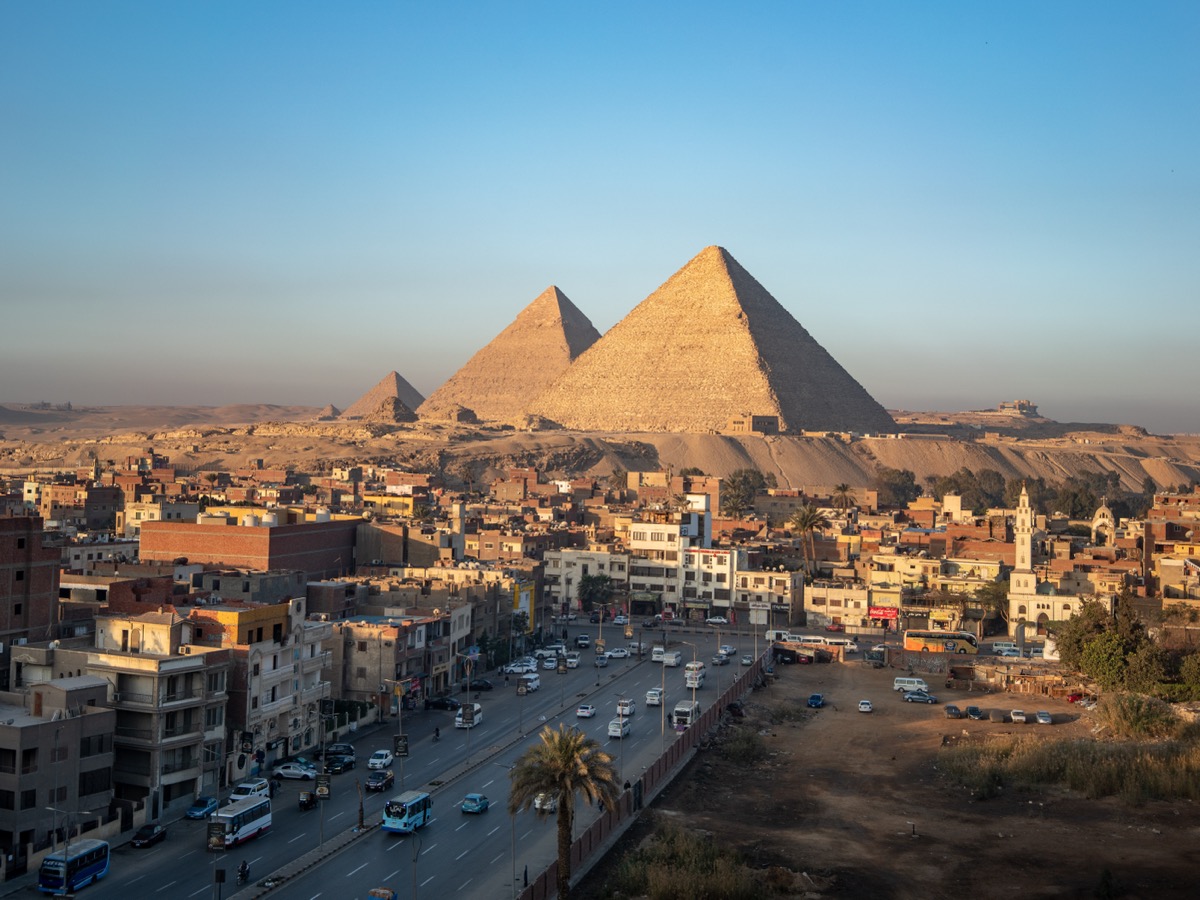
Cairo stands as the magnificent gateway to Egypt’s pyramids and ancient wonders. This sprawling megacity of 22 million inhabitants is characterized by high-density buildings and roads teeming with both cars and people. For most tourists, Cairo serves as the primary point of entry into Egypt, but it can be overwhelming at first—chaotic, confusing, occasionally aggravating, and undeniably intimidating. However, beneath this initial impression lies a city rich with history, culture, and unforgettable experiences.
Arrival in Cairo
We started our trip by visiting Paris for about a week, though it was not our first or second time, so we relaxed, and walked around, and met with friends. Our journey in Egypt began with a Vueling flight from Paris Orly to Cairo, which proceeded smoothly. Upon arrival at the airport, we took the following steps:
First, we purchased Egyptian visas from bank counters in the pre-immigration area ($25 cash per person). This step is crucial for visa-on-arrival; without the visa sticker, you’ll be turned away at immigration. Next, we withdrew Egyptian pounds from an ATM, passed through immigration, and bought Vodafone SIM cards in the arrival hall.
Having arranged our transfer in advance, reaching our hotel was straightforward. Contrary to my expectations, the taxi drivers outside the airport weren’t aggressive at all. The journey to Giza, near the pyramids, took about an hour due to heavy traffic. Our hotel, while not exceptional in itself, offered one of the most spectacular views of the pyramids available.
Our Time in Cairo
We allocated four days to explore Cairo, which proved to be an ideal duration. Our itinerary consisted of three nights initially, followed by a trip to Luxor, and then another day in Cairo before departing. We chose to stay in Giza, though not in the immediate vicinity of the Pyramids like many accommodations in that area. Our hotel, Pyramids View Suites, offered what I consider the best view of the pyramids anywhere, making up for the merely adequate quality of the hotel itself.
The weather in February was pleasantly mild, with comfortable daytime temperatures and cool evenings that sometimes required a light jacket. It was an ideal time to explore without the intense heat that Egypt is known for. Of course, summer can be scorching, with temperatures soaring well above comfortable levels, so timing your visit accordingly is something to keep in mind.
Unlike many, we chose to travel independently without a guide or a tour in Egypt (more on that in the FAQ). However, we had the help of an Egyptian friend of ours from Seattle who lives in Cairo now. He kindly provided us with a car and a driver for a day and half to explore Giza and Saqqara, and that certainly elevated our experience in Cairo. We also had dinner together, and they introduced us to authentic Egyptian food at a restaurant in Zamalek.
First Impressions of Cairo
Cairo is truly a mega-city with over 22 million inhabitants, making it one of the most densely populated places on Earth. Unlike Paris, which has undergone significant modernization and urban planning, Cairo has never experienced comprehensive remodeling or design processes. Consequently, it struggles with overwhelming traffic and pollution—perhaps among the worst of any major global city.
For transportation, Uber and Careem provide reliable and incredibly affordable options. Crossing streets in Cairo presents a formidable challenge—I prefer taking an Uber to the other side rather than attempting to cross a major thoroughfare on foot!
One of the biggest surprises about Egypt was the sheer extent of its security measures—checkpoints, metal detectors, and X-ray scanners were ubiquitous. We probably went through as many security checks during this trip as we had in our entire lives before it. It was overly excessive, likely a reflection of the mindset emanating from Egypt’s military rule over the past 70 years.
As Persian speakers, we found the similarities between Persian and Arabic somewhat helpful but limited. While we share the same alphabet and Persian incorporates many Arabic words (roughly 20-30% by some estimates, though often with different meanings), spoken Egyptian Arabic remains largely incomprehensible to us.
We were pleasantly surprised to discover that Egyptians generally hold Iran in high regard, which prompted us to proactively mention our Iranian heritage in conversations. Given that such positive sentiment isn’t universal, we appreciated and embraced this cultural connection.
Tips for Traveling in Cairo
I strongly recommend avoiding traditional taxis to prevent potential pricing disputes. Instead, rely on ride-hailing services like Uber, Careem, or inDrive. While card payment is available, cash is preferable since these services typically pay drivers monthly, making drivers more inclined to accept cash-paying customers. We experienced difficulty securing rides until we switched to cash payments.
Arranging airport transfers through your hotel or booking platform (sometimes offered for free or discounted rates, as in our case) is highly advisable. Though potentially more expensive than Uber, it eliminates the stress of navigating transportation systems immediately upon arrival.
As of this writing in March 2025, the days of black market for dollar exchange are gone, and unlike some outdated posts online, there is but one exchange rate, so you can safely draw Egyptian pounds from ATMs, and spend them. We did not encounter anyone asking for US dollars instead.
Understanding Egypt’s tipping culture is essential before your visit (a good resource is this blog post). Tipping is expected in Egypt, similar to the United States in certain contexts. However, the practice can create awkward interactions, as it becomes difficult to distinguish genuine kindness from service motivated by anticipated tips—an aspect of Egyptian tourism that we found somewhat off-putting.
The vast majority of Egyptians are wonderful, friendly, and helpful individuals. Only a minority will attempt to take advantage of tourists, but unfortunately those are the ones who constantly try to interact with you! You can protect yourself by researching potential scams, learning standard price ranges, confirming which currency is being quoted, and clarifying whether prices apply to individuals or groups, etc. With proper preparation, smart travel habits, and realistic expectations, you can mitigate negative experiences. Don’t let online horror stories dissuade you from visiting Egypt!
Pyramids of Giza
I wrote extensively in another blog post about the pyramids. However, much like all visitors from ancient to modern times, when you see the pyramids in person, you can’t stop wondering how ancient Egyptians constructed these monumental structures. Various theories—most involving ramps—attempt to explain their construction methods, but none are fully conclusive or definitively proven. It’s truly mind-boggling that structures built 4,700 years ago continue to puzzle “modern” humans regarding their construction techniques.
Did the pyramids meet my expectations? Both yes and no. Viewing them from a distance, with modern buildings providing scale perspective, was genuinely awe-inspiring—their immense size was breathtaking. This is why I particularly liked the view from our hotel room. However, up close, I must admit that the pyramids didn’t evoke the same level of wonder, as their true magnitude became harder to fully comprehend.
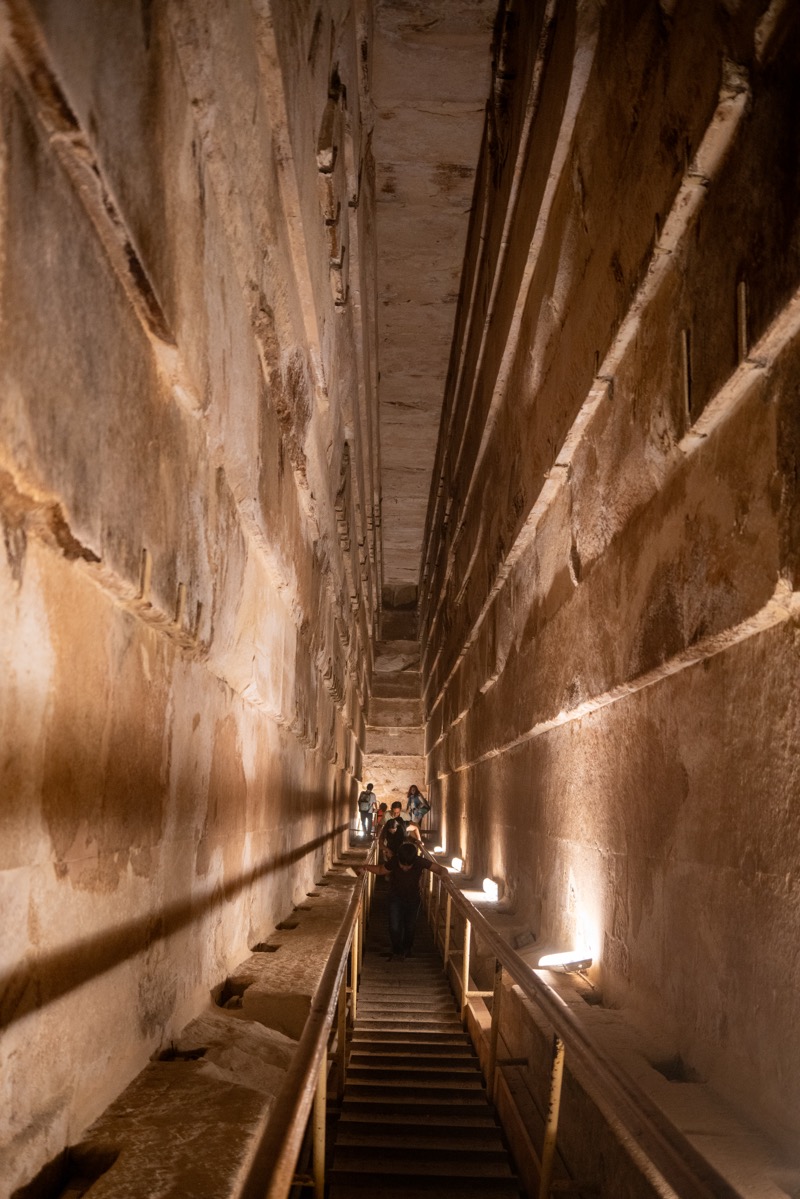
I chose to enter Khufu’s Pyramid, the most popular and expensive one to access. This experience isn’t suitable for everyone, particularly those with claustrophobia, knee problems, or above-average height. While the interior offers limited sights, I appreciated seeing the Grand Gallery up close. Its purpose remains uncertain, though some theories suggest it facilitated the transport of massive granite stones—a hypothesis that seemed more plausible after witnessing it firsthand.
One way or another, the pyramids are the primary motivation for visiting Egypt, and justifiably so. They stand as remarkable testaments to human ingenuity from a time so remote it challenges our imagination.
Saqqara
Just 30km south of Cairo lies Saqqara, an ancient necropolis that served as Memphis’s burial ground for thousands of years. This sprawling archaeological site demands dedicated transportation—we arranged a driver for the day rather than attempting ride-sharing services that might prove difficult for return journeys.
The site’s centerpiece, Djoser’s Step Pyramid, represents mankind’s first monumental stone structure and the evolutionary precursor to the true pyramids at Giza. Built around 2670 BCE by the legendary architect Imhotep, this six-tiered structure marked a revolutionary advancement in construction techniques.
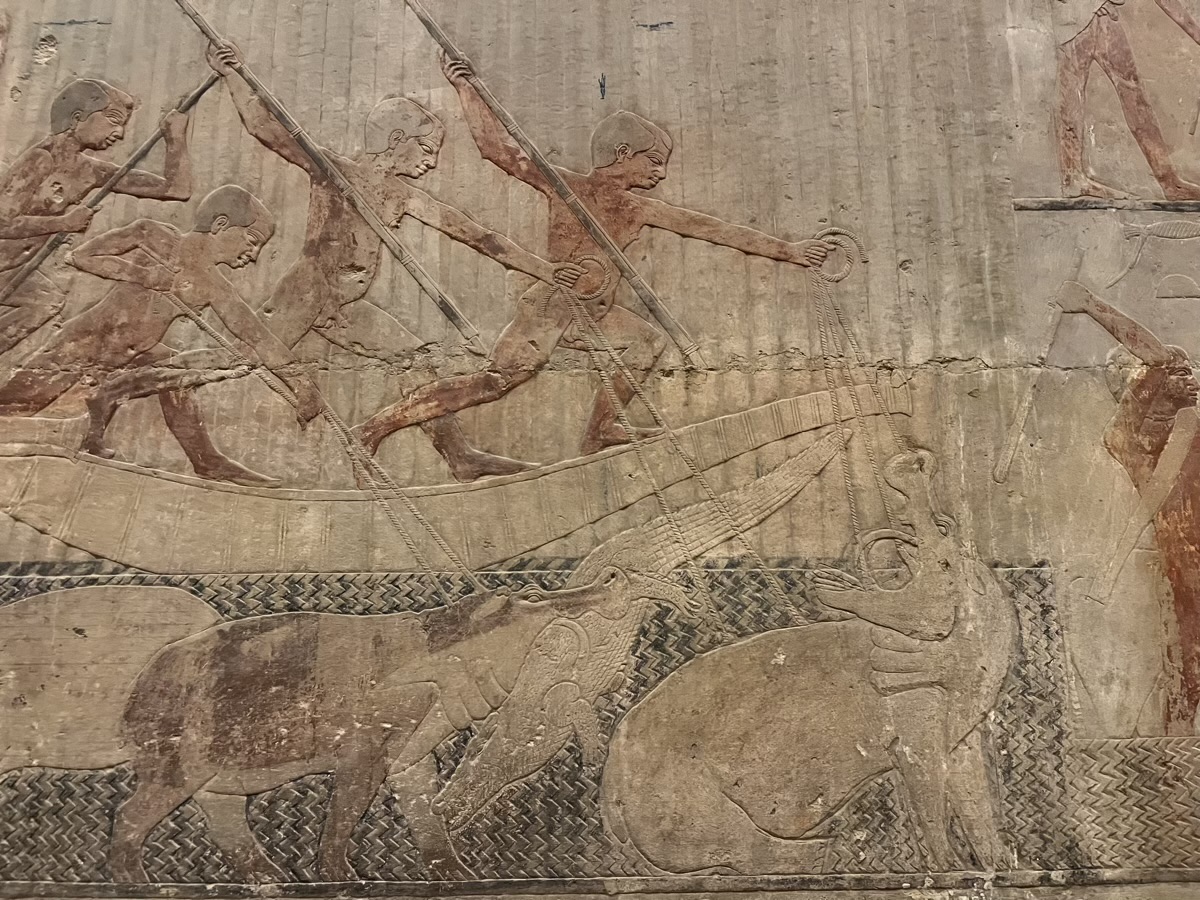
Saqqara also features numerous mastaba tombs with remarkably preserved reliefs depicting daily life in ancient Egypt. The recently opened Tomb of Idut showcases vibrant hunting and fishing scenes, while the Tomb of Ti contains detailed agricultural activities that provide invaluable insights into ancient Egyptian life. While these tombs certainly impress, they admittedly don’t match the spectacular painted scenes awaiting in Luxor’s Valley of the Kings (covered in my forthcoming Luxor post).
A couple of times, the caretakers of the tombs unlocked closed tombs for us to visit, and we gave them a small tip of 10–20 EGP in return. It’s unclear whether these tombs were meant to be locked in the first place, but we didn’t mind. We also encountered more instances of people attempting to offer unsolicited explanations in hopes of receiving a tip afterward, but we simply said “shokran” and moved on.
Other Notable Places to Visit in Cairo
Egyptian Museum in Cairo
This museum currently qualifies as a must-visit attraction, housing several crucial artifacts including Tutankhamun’s funerary mask and sarcophagus—truly remarkable treasures to behold. I emphasize “currently” because Tutankhamun’s artifacts will eventually relocate to the Grand Egyptian Museum, at which point the GEM will become the essential museum experience.
Extremely popular with tourists, the museum can become quite crowded, particularly in the morning. We initially considered returning earlier another day but discovered that midday or afternoon visits offer a less congested experience. Beyond Tutankhamun’s treasures, the museum displays important statues, several mummies, and numerous funerary sarcophagi.
Touring with a guide might enhance your visit, especially without prior research into ancient Egyptian history—otherwise, much of the significance may be lost. Having conducted our research beforehand, we opted against hiring a guide and felt our experience remained comprehensive.
Grand Egyptian Museum
Constructed at a staggering cost of $1.2 billion, this museum has yet to fully open. Complete inauguration is anticipated by mid-2025. Currently missing are Tutankhamun’s tomb items (awaiting transfer from the Egyptian Museum) and the 44-meter-long, 4,700-year-old wooden Khufu’s ship—an artifact I particularly hoped to see but remains unavailable for viewing.
While we did visit this massive and architecturally striking building, I believe the expensive entrance fee isn’t currently justified given the incomplete exhibits.
Islamic Cairo
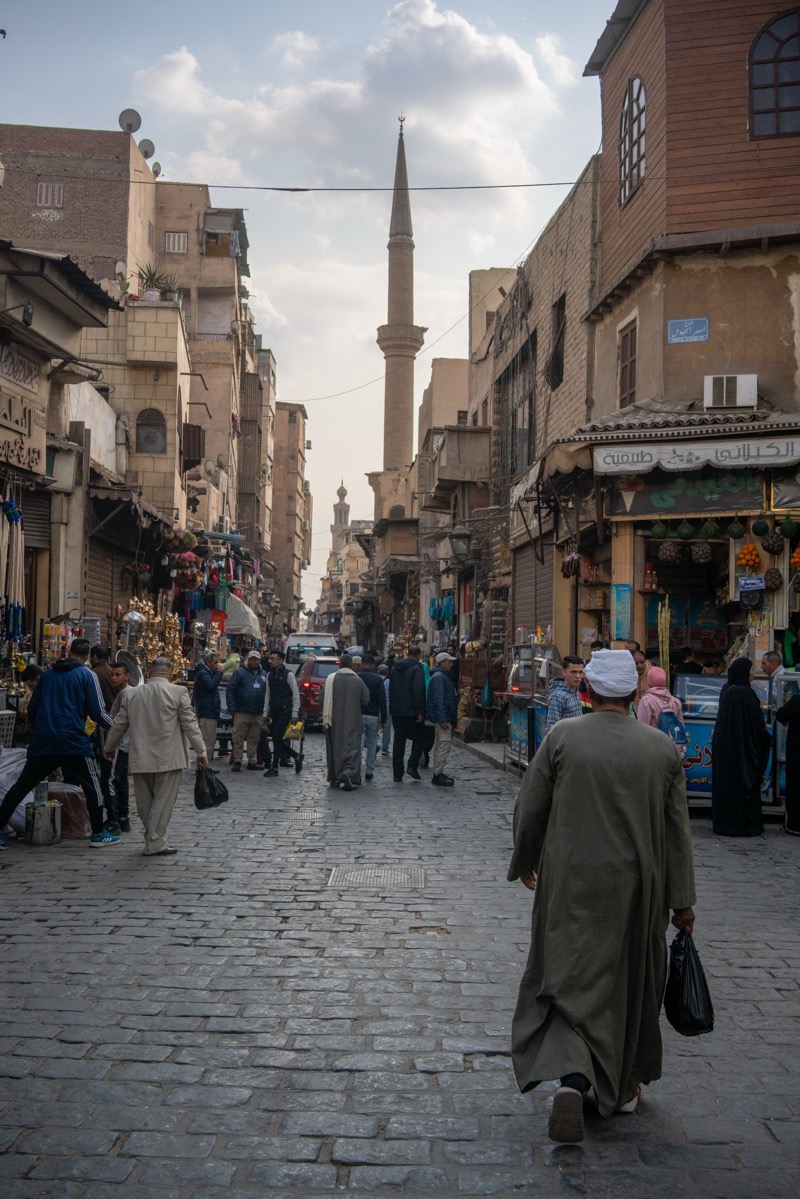
This area pulsates with life—vibrant, chaotic, and energetic. Khan al-Khalili bazaar exemplifies this dynamism, offering rich opportunities for street photography. However, navigating this bustling environment requires constant vigilance, especially when supervising children amidst the chaos.
Despite warnings about the overwhelming crowds and aggressive vendors in Khan al-Khalili, we encountered no problems whatsoever. We also visited Al-Azhar Mosque, though in retrospect, this could probably be omitted from our itinerary.
Cairo Citadel
Perched on Mokattam Hill with panoramic city views, the Cairo Citadel (Saladin Citadel) has protected the city since Saladin’s establishment in the 12th century. While its military importance has diminished, the complex remains culturally significant for housing the magnificent Muhammad Ali Mosque.
This Ottoman-style mosque, completed in 1848, features soaring domes, slender minarets, and an alabaster-clad courtyard that dazzles in sunlight. The interior’s hanging globe lamps create a magical atmosphere different from earlier Islamic architectural styles found elsewhere in Cairo.
The Citadel’s National Military Museum occupies several historic buildings but presents information primarily in Arabic with limited translation. The panoramic city views from the terrace, however, justify the visit regardless of exhibition content.
We also visited Al-Rifa’i Mosque, which holds historical significance as the burial site of the late Shah of Iran, Mohammad Reza Pahlavi. The mosque itself is an architectural gem, blending Ottoman and Mamluk influences, and serves as the final resting place for several members of Egypt’s royal family.
Right across from it stands the Madrasa of Sultan Hassan, one of the most impressive examples of Mamluk architecture in Cairo. Built in the 14th century during the reign of Sultan Hassan (1356–1363), this grand complex functioned as both a mosque and an Islamic school, housing students from the four major Sunni schools of thought. Its sheer scale, intricate stonework, and massive central courtyard make it a breathtaking sight. The towering entrance and colossal dome add to its imposing presence, making it one of the most remarkable historical landmarks in Islamic Cairo.
Thoughts on Cairo
Cairo is a city of contrasts—chaotic yet captivating, overwhelming yet rich with history. The city’s intense traffic, pollution, and ever-present security measures can make it a challenging destination, but its deep cultural and historical significance makes it worthwhile. Traveling independently in Cairo allowed us to explore at our own pace and appreciate both its challenges and its wonders.
FAQ
Is Egypt/Cairo Safe for Independent Travel, or I have to go with a guide/tour?
If you’ve researched traveling to Egypt online, you’ve likely encountered alarming warnings about scams, harassment, and safety concerns—particularly in Cairo and around the Giza pyramids. These warnings often leave potential visitors wondering: Is a guide or tour company essential for safety?
After extensive research that had me questioning my decision to visit independently, I trusted my instinct that negative experiences might be disproportionately represented online. Our family decided to navigate Egypt without guides or tour packages, and our experience challenges many common perceptions:
Most vendors respected a simple “Shokran” (thank you) as we declined their invitations. Service providers at tourist sites accepted our polite refusals without persistent following. Throughout our journey, countless Egyptians warmly welcomed us to their country with genuine hospitality.
We encountered only one attempted scam—an Uber driver who canceled our ride then demanded a higher cash payment, which we resolved by simply walking away. Even this minor incident could have been avoided by selecting the cash payment option initially.
Rather than deterring independent travel, I recommend:
- Researching common scams before visiting
- Learning basic Arabic phrases for greetings, and polite refusal
- Setting clear price expectations before accepting services
- Maintaining confident body language and walking with purpose
- Trusting your instincts when interactions feel uncomfortable
Several factors may have influenced our largely positive experience:
- Traveling as a family with a young child likely changed how people approached us
- Occasional accompaniment by an Egyptian driver in tourist areas
- Our physical appearance (particularly mine) somewhat resembling locals
My rule when traveling in overly touristy places all over the world is: you can trust people you approach, but do not trust people who approach you. They might ask you to come over to show you something in a temple, and then ask for money, or say they can take your photo, grab your phone, take a few snaps, and then demand money to return the phone, etc. These are very simple to avoid.
How is traveling in Egypt with a young kid?
Our four-year-old son previously showed limited interest in archaeological sites - understandbly so!- so we approached Egypt’s ancient monuments with modest expectations. Surprisingly, he engaged enthusiastically throughout our exploration of pyramids and temples. We discovered several strategies that enhanced his experience:
- Creating simple scavenger hunts (finding animal hieroglyphs became a favorite game)
- Inventing child-friendly stories about ancient figures (Imhotep, actual architect of the Step Pyramid, became a recurring character in our tales)
- Posing playful questions (“Why didn’t the mummy brush his teeth?”)
- Planning afternoon hotel breaks for swimming and relaxation
- Maintaining familiar snacks and routines amid new experiences
For health and safety with young children:
- Avoid tap water (including for teeth brushing)
- Skip raw vegetables and unpeeled fruits
- Carry hand sanitizer for frequent use
- Prepare for limited car safety options (most vehicles lack functioning rear seatbelts)
- Pack essential medications, as familiar brands may be unavailable
How does Egypt/Cairo compare to India in terms of travel difficulty?
Having explored both countries, I would classify them as nearly equivalent in difficulty, though if pressed to choose, I’d say Egypt presents slightly fewer challenges: Egypt is generally cleaner (with fewer animals roaming the streets), can be less crowded and chaotic (outside certain Cairo areas), and exhibits less extreme poverty than India. Regarding scams, both countries seem comparable, with tourist areas in both places harboring numerous scammers. In terms of frustrations, both countries can be equally trying—activities like booking train tickets online or navigating local websites often become nightmarish experiences, leaving visitors wondering why straightforward design solutions haven’t been implemented.
I would note that Indians generally seem marginally friendlier than Egyptians, though the difference isn’t substantial. Additionally, Egypt’s tipping culture sometimes creates uncomfortable dynamics, fostering the impression that assistance is motivated primarily by anticipated tips—though this isn’t necessarily accurate.
Despite these challenges, I thoroughly enjoyed visiting both countries and created incredible memories in each. In fact, part of the adventure of traveling in these destinations involves navigating the very difficulties they present!
Didn’t you miss all the explanations without a guide?
There are two types of guides: those who truly know their stuff and those who make things up. The challenge with hiring a guide is that you never know which one you’ll get. To prepare for our trip, we did extensive research, reading books and watching documentaries, which I summarized into two blog posts here and here. This background knowledge helped immensely when exploring archaeological sites, tombs, and temples.
Another downside of guided tours is that they often rush you from one spot to the next, which we don’t enjoy. By exploring on our own, we may have missed a few details, but we gained the freedom to set our own pace, avoid the hassle of negotiating prices, and save a significant amount of money.