Working Remotely While Traveling Europe with a Five-Year-Old
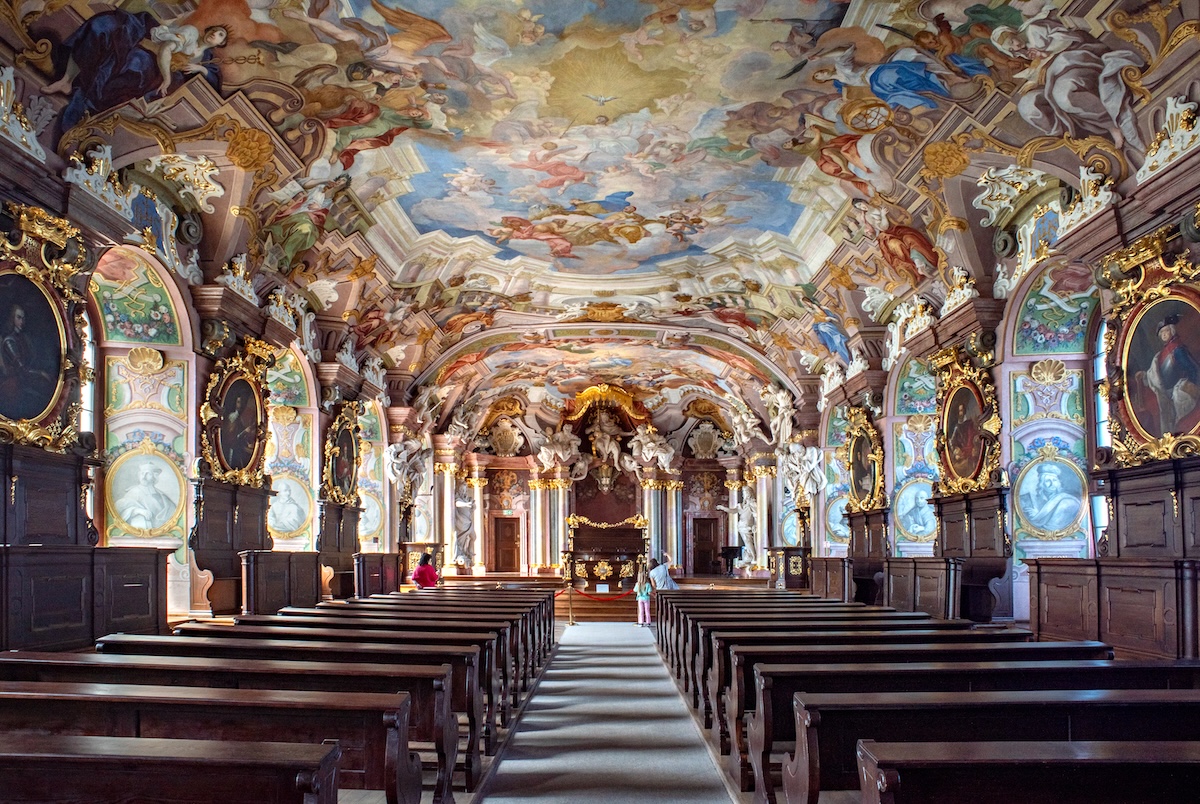
Long-term family travel is not new to us. Our first experiment was a four-month sabbatical in Europe in 2022, when our son was only one year old, and we traveled to 8 countries all around Europe. Traveling with a one-year-old came with its own challenges, but at that age, he mostly followed the routines and plans we made for him.
In September 2023, we embarked on a much more ambitious nine-month journey around the world, visiting 15 countries across Europe, the Middle East, Southeast Asia, and Oceania. Then, at the beginning of 2025, we set out on another four-month trip through the Middle East and Europe, beginning in Paris and continuing through Egypt, Jordan, the UAE, Iran, Italy, and Iceland. Across those trips, we experienced the familiar progression from traveling with a baby to traveling with a toddler and then a preschooler.
This time, he was five. The difference was substantial. He could tell us what he wanted to see, anticipate the next part of the trip, walk long distances, and hold lengthy conversations with us and the people we visited. He was no longer simply coming along on a trip planned by his parents; he was participating in it and having his own experience of it.
Compared with those journeys, six weeks in Europe sounded relatively modest. But this trip involved something we had not tried before: I would continue working full-time while we traveled. On our earlier long journeys, neither of us was working full-time, and we spent our days sightseeing and taking care of our son together. This time, our weekdays would often split in two: my wife and son would explore while I worked, and I would join them when my schedule and energy allowed.
The real question was not only whether I could continue working while traveling. It was whether we could make this arrangement work as a family, with one parent working full-time and the other spending most weekdays taking care of and exploring with an energetic five-year-old. And because he was now old enough to understand the arrangement and express his own opinions, whether the trip worked for him mattered too.
The timing gave us a narrow window to try it. My company supports remote work, my wife was not working at the time, and our five-year-old son was about to start kindergarten. We took him out of preschool roughly six weeks early, knowing that trips of this length would become much harder once we had to follow a school calendar.
The plan seemed reasonable: stay in each city for close to a week, let my wife and son explore during the day, use the mornings for some exploration, and save the weekends for longer outings. Because my team is on the West Coast of the United States, I would work mostly from noon until 9 or 10 p.m. That would give me several hours of overlap with my colleagues while theoretically leaving the mornings open.
The reality was more complicated. I went out during only about one-third of the mornings; on the others, I either started work earlier or was too exhausted to do much before the workday began. My wife carried most of the daytime childcare, and I sometimes worked even longer hours than I did at home. We made the arrangement work, but it was far from the effortless version of “work from anywhere” that I had imagined.
Our Six-Week Route
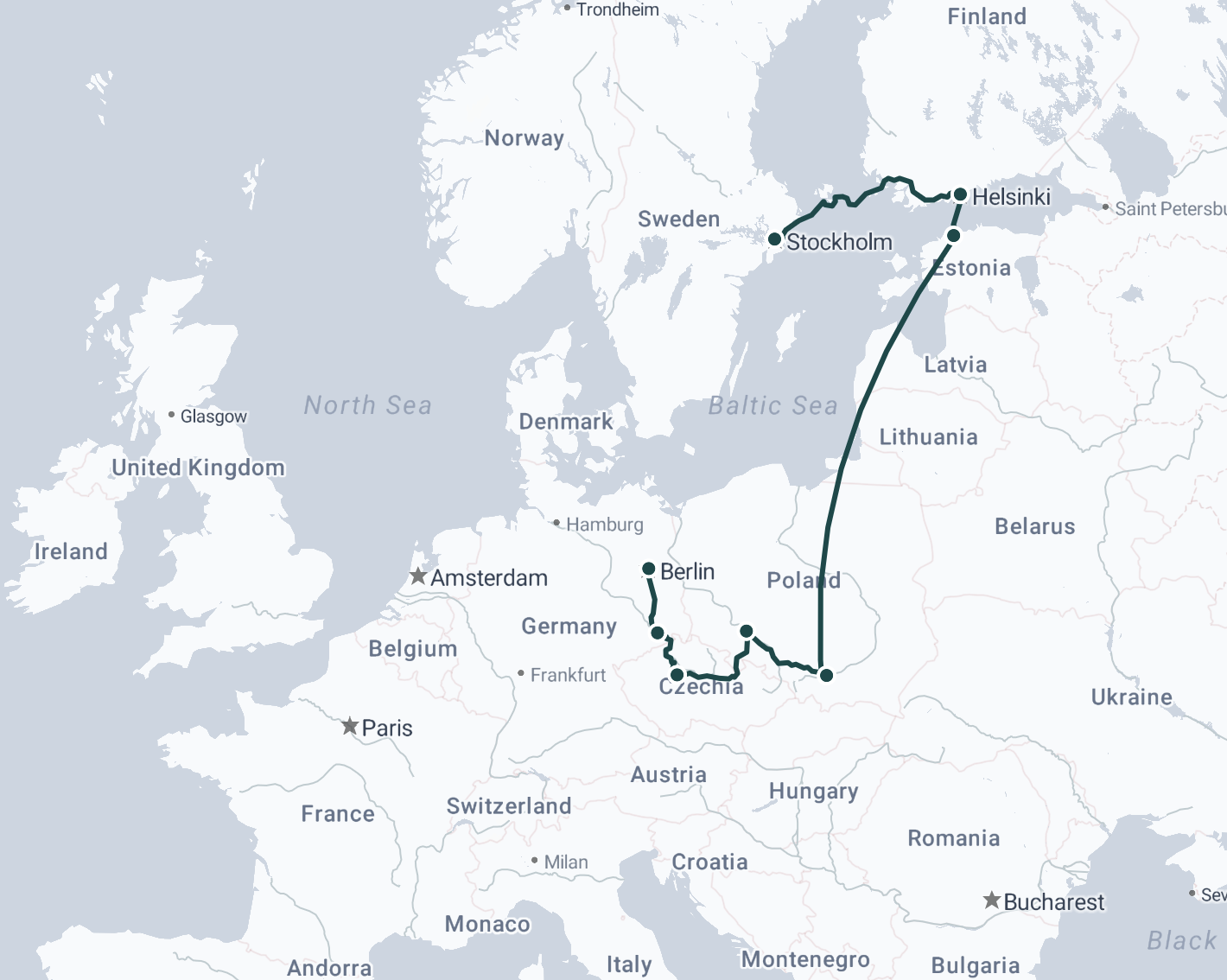
Our trip began with a flight from Seattle to Berlin. From there, we traveled by train through Germany, Czechia, and Poland, before flying north to Tallinn and continuing by ferry through Helsinki and Stockholm.
| Destination | Nights | How we arrived |
|---|---|---|
| Berlin | 6 | Flight from Seattle |
| Dresden | 4 | Train from Berlin |
| Prague | 6 | Train from Dresden |
| Wrocław | 6 | Train from Prague |
| Kraków | 6 | Train from Wrocław |
| Tallinn | 4 | Flight from Kraków |
| Helsinki | 4 | Ferry from Tallinn |
| Stockholm | 5 | Overnight ferry from Helsinki |
Most of our stops lasted six nights, although a few were shorter. Berlin, Prague, Wrocław, and Kraków each gave us nearly a week in one place, while Dresden, Tallinn, and Helsinki were four-night stays. After the overnight ferry from Helsinki, Stockholm was our final destination before flying home.
All of these were destinations I had wanted to visit, and despite the limited time available to me, I managed to see most of what I had hoped to see. Berlin was the clearest exception. I had only roughly a day and a half to explore with my family, so there was much more of the city that I did not get to experience. Still, the overall pace was far more compatible with work than a trip where we changed cities every two or three days would have been.
I’ll cover the destinations themselves in a separate post, including what we visited and what stood out in each city. Here, I want to focus on what it was like for us to combine family travel with my remote work—how we organized the trip, how the arrangement affected each of us, the challenges we encountered, and what we would do differently.

Moving Between Cities
The train journeys were one of the best parts of the plan. We booked the tickets in advance and reserved seats, which made the travel comfortable and predictable. All the trains we took had Wi-Fi, so I could work, watch YouTube, or simply relax during the journey.
The trains were not always perfectly on time. Our journey from Prague to Wrocław, for example, was delayed by roughly an hour. Apart from delays like that, however, the experience was very pleasant. Given the choice, I would take train travel over air travel any day.
Up to Kraków, the entire route was by train. We then flew from Kraków to Tallinn, took a ferry from Tallinn to Helsinki, and finally took an overnight ferry from Helsinki to Stockholm. The overnight ferry was particularly enjoyable and felt like part of the trip rather than simply a way to move between two places.
Our son loves travel days. He has traveled enough that trains, planes, and ferries feel completely natural to him, and he enjoyed the journeys rather than merely tolerating them. The ferries were a family favorite: he enjoyed the views, exploring the ships, the entertainment and food, and the novelty of sleeping in a cabin at sea.
What Our Days Actually Looked Like
My intended schedule was to begin working around noon and continue until approximately 9 or 10 p.m. This gave me useful overlap with my team on the West Coast, while theoretically leaving the mornings available for some exploration. If a meeting required it, I could also join earlier in the day.
In practice, I probably went out during only about one-third of the mornings. On some days, I needed to begin working earlier. On others, I was simply too exhausted and used the morning to relax a little before starting another long workday. The free mornings existed on the schedule, but I did not always have the time or energy to use them.
That also meant the amount of time I spent with my son varied considerably. On some mornings, we went sightseeing together. On the more work-heavy days, I might see him only at breakfast and again shortly before he went to sleep. We had explained the arrangement before the trip, and he understood that I needed to work. He occasionally came to see me while I was working, but he handled it remarkably well.
This schedule worked in the narrow sense that I remained available to my team, but it changed the way I experienced every destination. A six-night stay sounds substantial, but when most weekdays are workdays, it may provide only one full weekend and a few mornings for exploration. In Berlin, for example, I had roughly a day and a half to explore with my family. In Prague, I spent most of my time working at the hotel and went out mainly during the weekend and on a couple of mornings.
Three Different Experiences of the Same Trip
Although we followed the same itinerary, the three of us experienced the trip very differently.
Our son was such a trooper throughout the journey. He walked with us for hours, sometimes covering as many as 25,000 steps in one day. All he seemed to need was a couple of ice creams and a willing audience for his endless animal stories. He especially enjoyed zoos, aquariums, natural history museums, and anything involving animals. In Kraków, he loved spending time with my cousin and his wife, and having two more people available to hear his animal stories.
He generally enjoyed the trip, spending so much time with us, and the considerable perk of skipping preschool. He occasionally talked about and missed his friends. A couple of times, he briefly said that he wanted to go home, but the feeling was fleeting. For the most part, he embraced the six weeks with the ease of a child who has already traveled extensively and feels at home on the road.
For my wife, the experience was more complicated. She enjoyed visiting all these places and spending so much uninterrupted time with our son, although perhaps not every single zoo! At the same time, taking care of an energetic five-year-old every day for six weeks was not easy. She carried most of the daytime childcare while I worked, so she is understandably less enthusiastic than I am about repeating the same arrangement.
My own experience was dominated by work, with exploration fitted into occasional mornings and weekends. We were all on the same family trip, but in many ways, we were living three different versions of it.
Finding a Reliable Place to Work
My portable setup. I brought a lightweight 16-inch external monitor to use with my MacBook, and it came handy when I had a proper desk. My AirPods Pro 3 were also extremely helpful when I worked from noisy hotel lobbies and cafés. But most importantly, I still needed a desk, reliable Wi-Fi, somewhere to take calls, and a workspace available until late in the evening.
Hotels. We chose hotels for most of the trip because they gave me more options than a single apartment. I could use the desk in the room while my wife and son were outside, then move to the lobby, hotel library, or another common area when they returned. The rooms generally had desks, but they were not dependable all-day workspaces: my family needed to come and go, and the in-room Wi-Fi was typically less reliable.
The experience varied by hotel. Some hotels like the ones in Berlin, Prague, or Helsinki had common areas where I could work, while poor Wi-Fi sometimes made working in hotels frustrating. Advertised business centers and conference rooms were not useful alternatives; they were generally unavailable, and when available, they were offered only for rent.
Libraries and coworking spaces. These were not very reliable either. The one public library I tried was crowded, required me to pack my laptop whenever I stepped away, and was unsuitable for calls. Coworking spaces usually closed around 5 or 6 p.m., just as my overlap with the West Coast was becoming most important. The only exception was in Stockholm where Scandic Hotels offer a shared coworking space - basically the hotel lobbies - for around $10 for 24h. They provide unlimited tea/coffee, WiFi, and proper desk setup. I did end up working in Scandic Continental 3 days.
Cafés. Later in the trip, I discovered that cafés were a much better solution. I asked ChatGPT or Gemini to find laptop-friendly cafés by checking for Wi-Fi and looking through reviews from people who had worked there. When I arrived, I tested the Wi-Fi speed before settling in; if it was not good enough, I moved on. Once I found a suitable place, I ordered a drink or food and often stayed for several hours. This generally worked much better than struggling with poor Wi-Fi in a hotel room or the limitations of a hotel lobby, and I should have started doing it much earlier.
The Difficulties I Underestimated
A heavier workload than expected. The biggest problem was not any single hotel or workspace. It was that the trip happened to overlap with a much more demanding period at work. We were releasing something, my workload increased, and I had to work longer hours than I had planned. Some days reached approximately 14 hours, which was far too much even at home, let alone while traveling.
Technical friction. Working away from my normal setup made everything less efficient. Wi-Fi and VPN problems were a recurring source of frustration, and I was frequently disconnected from the VPN. Each interruption created more churn and extended work that would otherwise have been straightforward. Combined with the stress of travel and unfamiliar surroundings, this turned an already heavy workload into something much more difficult.
An inverted workday. One thing I had seriously underestimated was how difficult it would be to invert my normal workday. At home, I of course begin working in the morning with most of my energy, finish around 5 p.m., and then have the evening to relax and recharge for the following day. During this trip, I reversed that rhythm. Any exploration or personal time came first, while the most demanding part of the day occupied the afternoon and evening.
I often worked until late at night, sometimes even until midnight, and then went to sleep shortly afterward. Even when I slept for eight hours, I often woke up feeling less rested and with less energy than usual. I was asking myself to do the hardest part of the day during the hours when I would normally be winding down, without leaving much time to decompress before sleeping.
Jet lag and poor sleep. The time change affected me far more than it affected the rest of my family. Our son adjusted almost immediately, and my wife needed only a few days, while I struggled for perhaps ten days or more. I think several things prolonged it: the stress of work, the inverted schedule, and too little daylight. In Berlin, I worked from the hotel library, which was a very dark space, so I spent much of the day without seeing much natural light. At night, I would frequently wake up and be unable to fall asleep again. Together, the poor sleep, late working hours, and limited daylight made the first part of the trip particularly difficult.
What Worked Well
The route. Despite these problems, I do not think the entire idea failed. The route itself worked well. Staying four to six nights in each city gave us a stable base, and we successfully completed the journey we had planned. I did not see everything, but I managed to visit most of what I had in mind.
The trains and ferries. The train-based portion of the trip was particularly successful. Booking in advance, having reserved seats, and being able to connect to Wi-Fi made the journeys comfortable. The two ferry trips were an even better experience. Both ferries were quite large, with entertainment, food, shops, and plenty of room to move around. The overnight journey from Helsinki to Stockholm was a blast. We stayed in a cabin with a sea view and enjoyed both the views along the way and the amenities on board. I would enthusiastically choose both trains and ferries again.
Flexible workspaces. Choosing hotels gave me useful flexibility, even if the experience was inconsistent. Being able to alternate between the room and common areas was important because the room needed to remain a family space as well as a temporary office. The setup worked well in some places, including Prague, and poorly in others, most notably Wrocław.
Discovering laptop-friendly cafés during the second half of the trip made working considerably easier. They often provided better Wi-Fi and a more dependable environment than the hotels where I had struggled to work.
Taking time off. I took most of our time in Kraków off, although I worked one day near the end. We stayed with my cousin and his wife, walked around the city, and had much more time to explore together. Our son particularly enjoyed having them around. That portion of the trip was much closer to a conventional vacation.
What I Would Do Differently
Take the first week off. The first change is clear: if possible, I would take the first week off. Beginning work immediately while still dealing with jet lag made the start of the trip unnecessarily difficult. Having time to recover, settle into the new schedule, and become familiar with the first destination would probably have made the transition much easier.
Reduce my workload. The bigger mistake was failing to reduce my workload before leaving. I should have anticipated that travel, unfamiliar workspaces, connectivity problems, and a large time-zone difference would all make work less efficient. Instead of trying to maintain the same workload, I should have delegated more to my colleagues and reduced the number of things I needed to worry about during the trip.
Start using cafés earlier. I also learned that having a desk and advertised Wi-Fi is not enough. The real question is whether there is a space where I can work reliably, take calls, remain until late evening, and move when my family needs the room. I should have started working from cafés much earlier. Using ChatGPT or Gemini to identify laptop-friendly places, checking reviews, and testing the Wi-Fi as soon as I arrived became a reliable strategy during the second half of the trip. When a hotel setup was clearly not working, as in Wrocław, I should have switched to this approach instead of continuing to fight with the hotel Wi-Fi.
Would We Do It Again?
I would do this kind of trip again, but not under the same conditions. I would need a lighter workload and would take the first week off before trying to combine work with travel. I also now have a much better sense of which workspaces are practical, when a hotel is not working, and when it is time to find a laptop-friendly café instead. The experience would be considerably easier for someone who did not have to shift the entire workday into the afternoon and evening.
My wife would probably be less enthusiastic about repeating it. She enjoyed the destinations and the extended time with our son, but six weeks of managing most of the daytime childcare was demanding. Any future version of this trip would need to account for her experience as much as my working conditions.
Despite the difficulties, I am glad we used this final six-week window before our son started kindergarten. At five, he was old enough to experience the journey on his own terms, and traveling with him was much easier than it had been when he was younger. The hardest part of this trip was not traveling with a five-year-old; it was trying to fit a demanding work schedule into the journey.
In the next post, I will focus on the journey itself: the cities we visited, the history we encountered, and the places that stood out along the way.