Italian Road Trip: Lake Garda, Cinque Terre, and Tuscany in Two Weeks
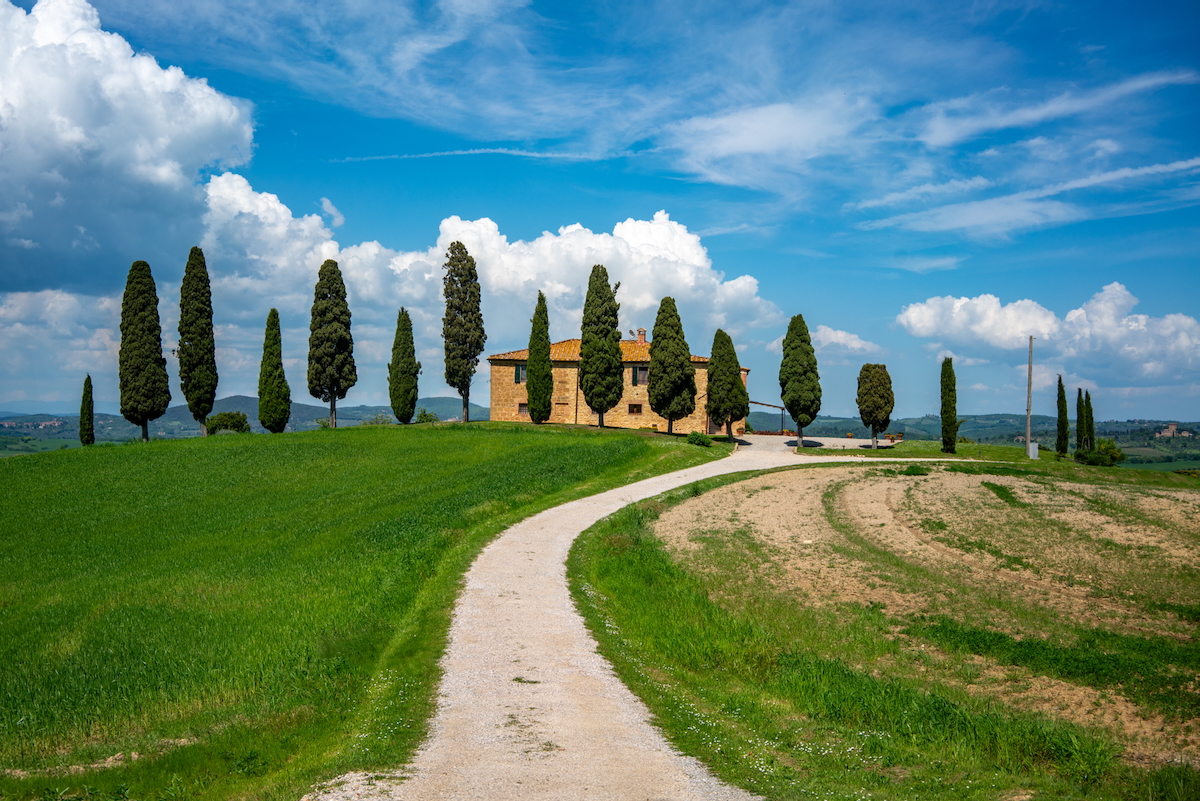
After an incredible journey through Egypt and Jordan, we visited Emirates briefly before heading to Iran to spend some quality time with family. Afterwards, our European adventure began in Italy—one of my absolute happy places. There’s something magical about Italy that keeps drawing me back: the exceptional food, warm-hearted people, breathtaking landscapes, and countless treasures waiting to be discovered. Despite having visited Italy more than any other country, I’m constantly amazed by how much more there is to explore.
This particular trip focused on Tuscany’s hidden gems, with unforgettable detours to Cinque Terre and Lake Garda. While I’d been to Florence before, I knew this journey would reveal that Tuscany is so much more than its famous capital city. What unfolded was a perfect blend of iconic destinations and off-the-beaten-path discoveries that reminded me why Italy holds such a special place in my heart.
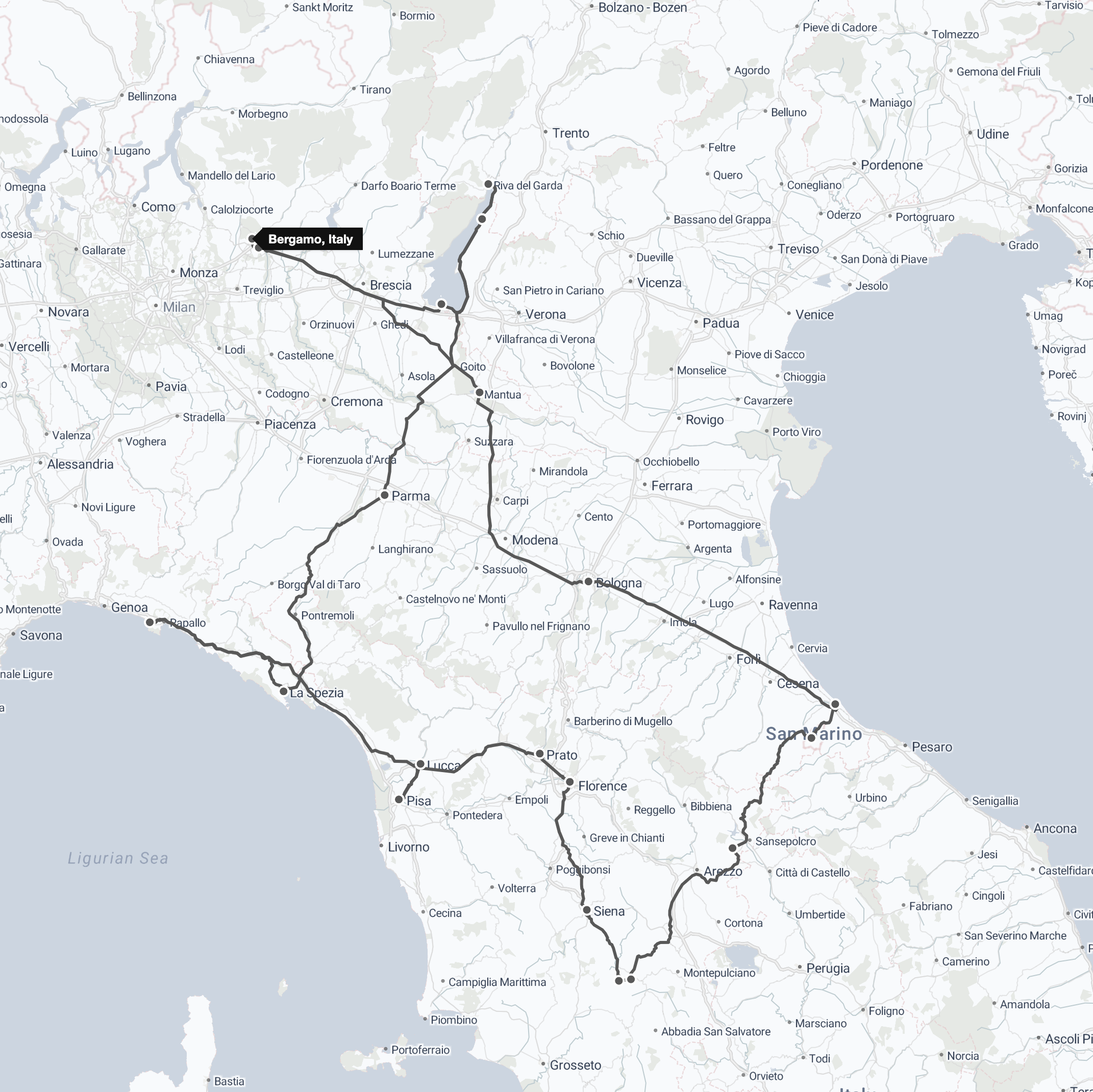
Our Italian Road Trip: The Complete Itinerary
Our adventure began at Bergamo Airport, where we picked up our rental car and embarked on a clockwise journey through Northern and Central Italy. From Bergamo, we headed north to the stunning shores of Lake Garda, then traveled west to the colorful villages of Cinque Terre, with a delightful stop in Parma along the way.
After soaking in the coastal beauty of Cinque Terre for several nights, we continued south to Pisa for a quick overnight stay before moving to Prato, our base for exploring Florence. The heart of our journey unfolded as we drove through Tuscany’s crown jewels: the medieval magnificence of Siena, followed by three magical nights in Val d’Orcia, where rolling hills and cypress-lined roads created picture-perfect moments at every turn.
Our final stretch took us northeast to Rimini to reconnect with friends, including an exciting detour to the tiny republic of San Marino. The journey concluded with our drive back to Bergamo, enhanced by stops in the vibrant university city of Bologna and the Renaissance treasure of Mantua.
Airport Blues: When Travel Plans Go Awry
Sometimes the most memorable travel stories begin with the unexpected challenges. Our journey from Tehran to Bergamo included a tight two-hour layover in Istanbul, which became problematic when our first flight was delayed by over an hour. As we disembarked in Bergamo, the AirTags in our checked luggage confirmed my worst fears—our bags were still sitting in Istanbul.
After filing a delayed luggage report (with estimates of up to two days for retrieval), we headed to collect our rental car, only to discover another snag: I had packed my driver’s license in the checked luggage. The rental company refused to give us the car, even with my wife as the main driver, because the reservation was under my name. So after an hour of phone calls with Booking.com customer service, we had no choice but to cancel our original reservation and book a new car under my wife’s name with a different rental company.
The replacement vehicle came with its own challenges: 1) it was a manual transmission instead of the automatic we’d reserved, and 2) my wife had to be the only driver, which she did not appreciate at all-but neverthless, we were finally on the road. Halfway to Lake Garda, I noticed the AirTags weren’t updating and checked the airport website to discover another Istanbul flight was incoming. Trusting our luggage might be aboard, we turned around and were rewarded when the AirTags showed our bags had indeed arrived in Bergamo.
This seven-hour delay taught us valuable lessons: never pack essential documents in checked luggage, always use luggage trackers, check subsequent flight schedules when bags are delayed due to short layovers, and whenever possible, travel with carry-on luggage only. Our bags were actually carry-on sized, but due to Pegasus Airlines’ restrictions on our ticket tier, we were forced to check them in—a mistake we won’t repeat.
Lake Garda: Northern Italy’s Crown Jewel
Lake Garda, Italy’s largest lake, stretches majestically between the regions of Lombardy, Veneto, and Trentino-Alto Adige. While often compared to the more famous Lake Como, Garda offers its own distinct character—larger, more varied, and perhaps less pretentious than its glamorous cousin to the west. Where Como is known for its celebrity villas and designer elegance, Garda charms visitors with dramatic mountain backdrops, medieval castles, and a more relaxed atmosphere that feels authentically Italian.
Originally planning just an overnight stop near Bergamo before heading to Cinque Terre, I stumbled upon Lake Garda during accommodation research and was immediately captivated by its beauty. We extended our stay to two nights, allowing us to properly explore this stunning region—a decision that proved absolutely worthwhile.
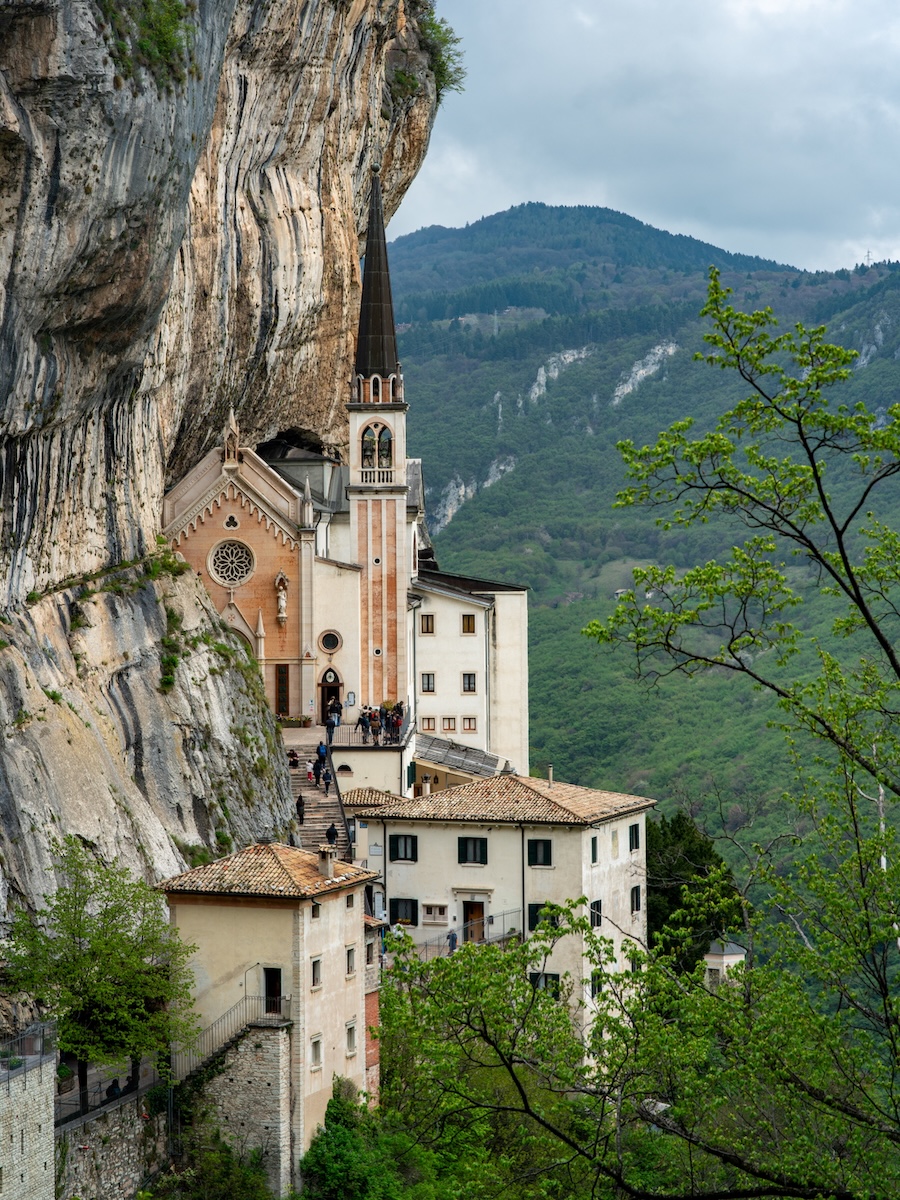
The highlight of our Lake Garda experience was visiting the Sanctuary of Madonna della Corona, a remarkable pilgrimage site built into a sheer cliff face 774 meters above sea level. This extraordinary sanctuary, perched dramatically on Mount Baldo, has been a place of worship since medieval times. The current structure, rebuilt in the 1970s, seems to emerge directly from the rock face, creating one of the most spectacular religious sites in Italy.
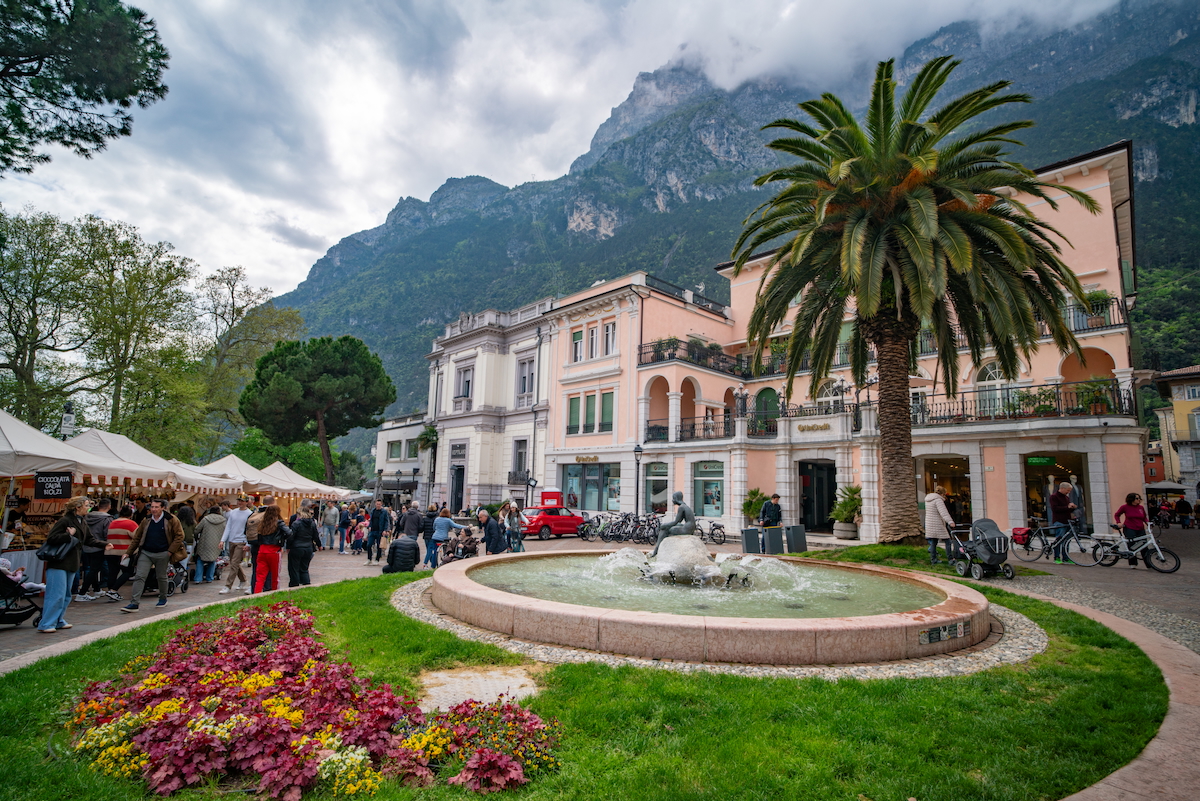
Our exploration continued in Riva del Garda, situated at the lake’s northern tip, which felt like stepping into a fairytale. This charming town is dramatically framed by towering mountains that plunge directly into the pristine waters, creating an almost fjord-like landscape that’s rare in Italy. The entire drive around the lake was absolutely gorgeous, winding through lush green mountains and offering countless photo opportunities at every turn.
Cinque Terre: Coastal Beauty Meets Tourism Reality
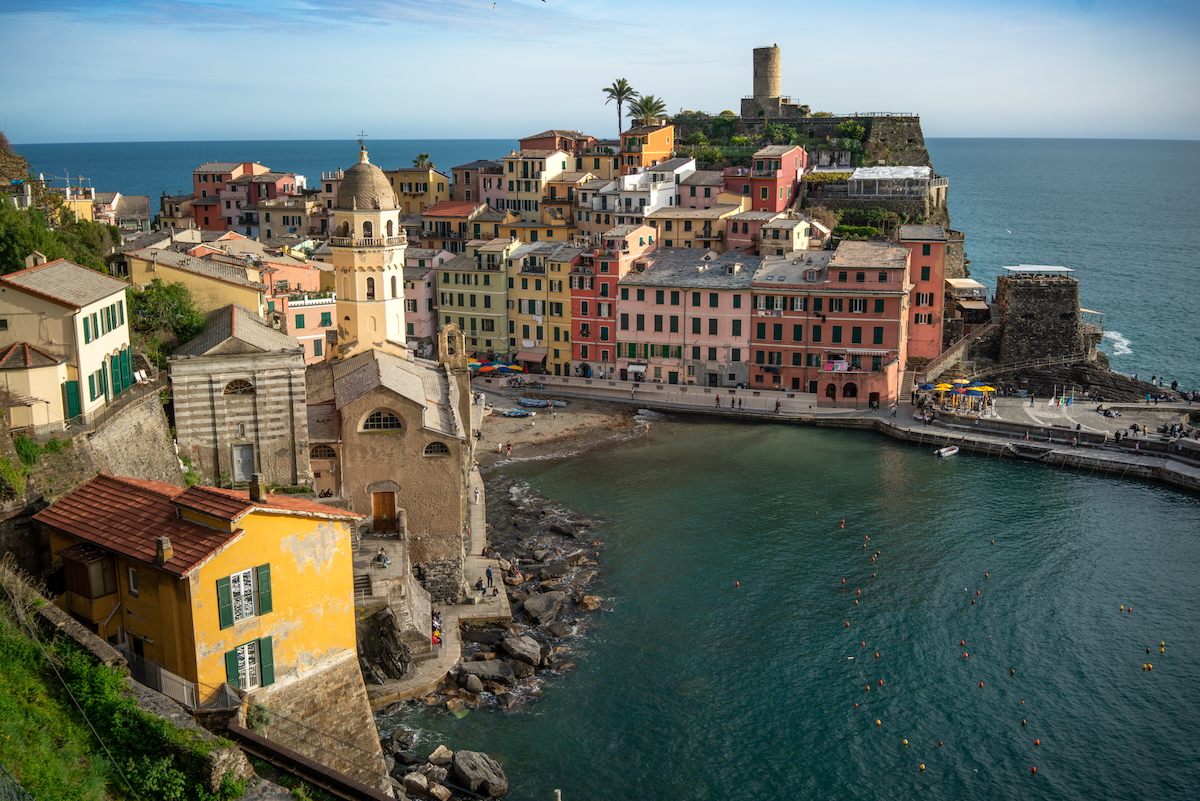
Cinque Terre, the “Five Lands,” represents one of Italy’s most visited destinations—a UNESCO World Heritage site comprising five picturesque fishing villages (Monterosso, Vernazza, Corniglia, Manarola, and Riomaggiore) perched on dramatic cliffs along the Ligurian coast. These centuries-old settlements, with their distinctive pastel-colored houses stacked vertically against the Mediterranean backdrop, have become synonymous with Italian coastal romance. However, this Instagram-worthy beauty comes with the reality of significant over-tourism, especially during peak season when narrow medieval streets become rivers of visitors seeking that perfect photo opportunity.
Since we were traveling by car, we couldn’t secure accommodation within the villages themselves (which is actually a blessing in disguise), so we stayed in a small village near La Spezia, the major transport hub for Cinque Terre visitors. This proved to be the ideal strategy, as driving to individual villages is highly discouraged due to extremely narrow, winding roads and virtually non-existent parking. The recommended approach is parking in either La Spezia or Levanto and using the efficient train system that connects all five villages, though be prepared for relatively expensive train tickets for the Cinque Terre route.
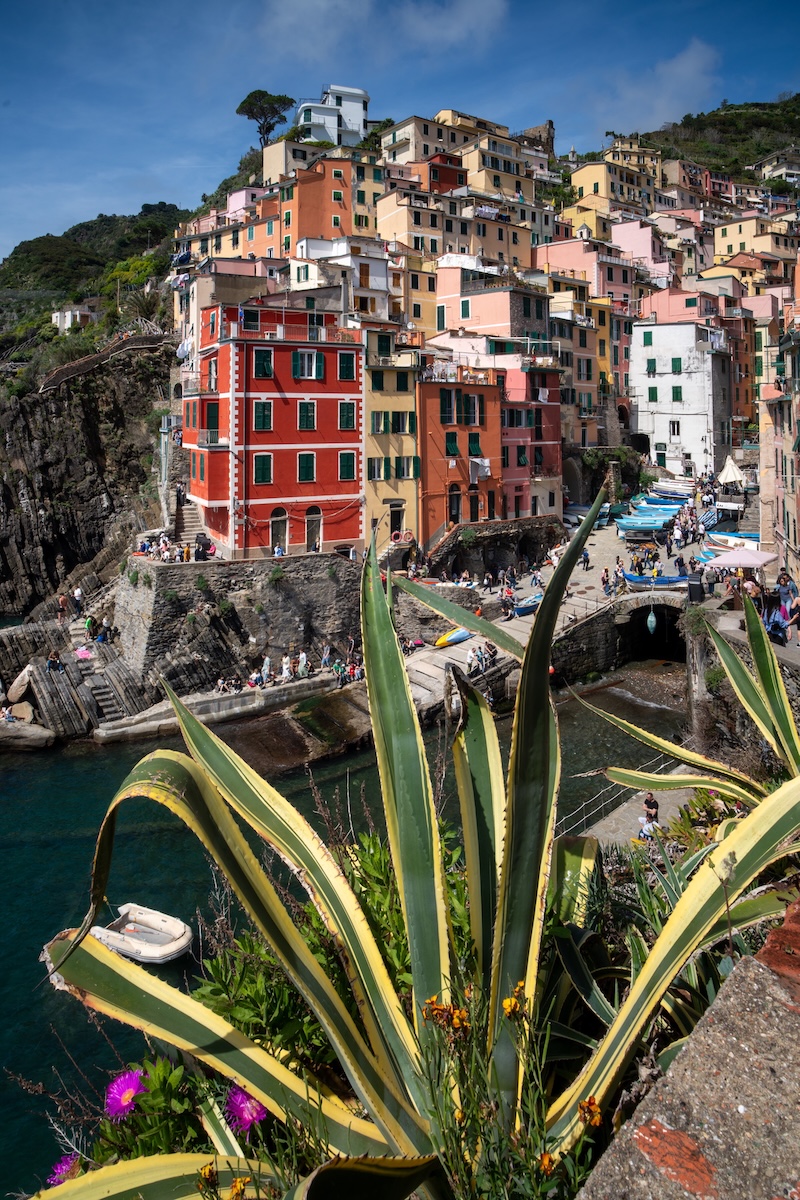
Our first day included an exploration of nearby Ligurian coastal gems. Initially planning to visit the famous Portofino, research revealed it to be an exclusive luxury destination with prohibitively expensive parking, so we opted for nearby Camogli instead. This decision proved perfect—Camogli offered the same picturesque coastal charm as Cinque Terre but with a fraction of the crowds. The rest of that day, we parked in Levanto and took the train to Vernazza, one of the most photographed villages with its harbor-side piazza and colorful houses climbing the hillside.
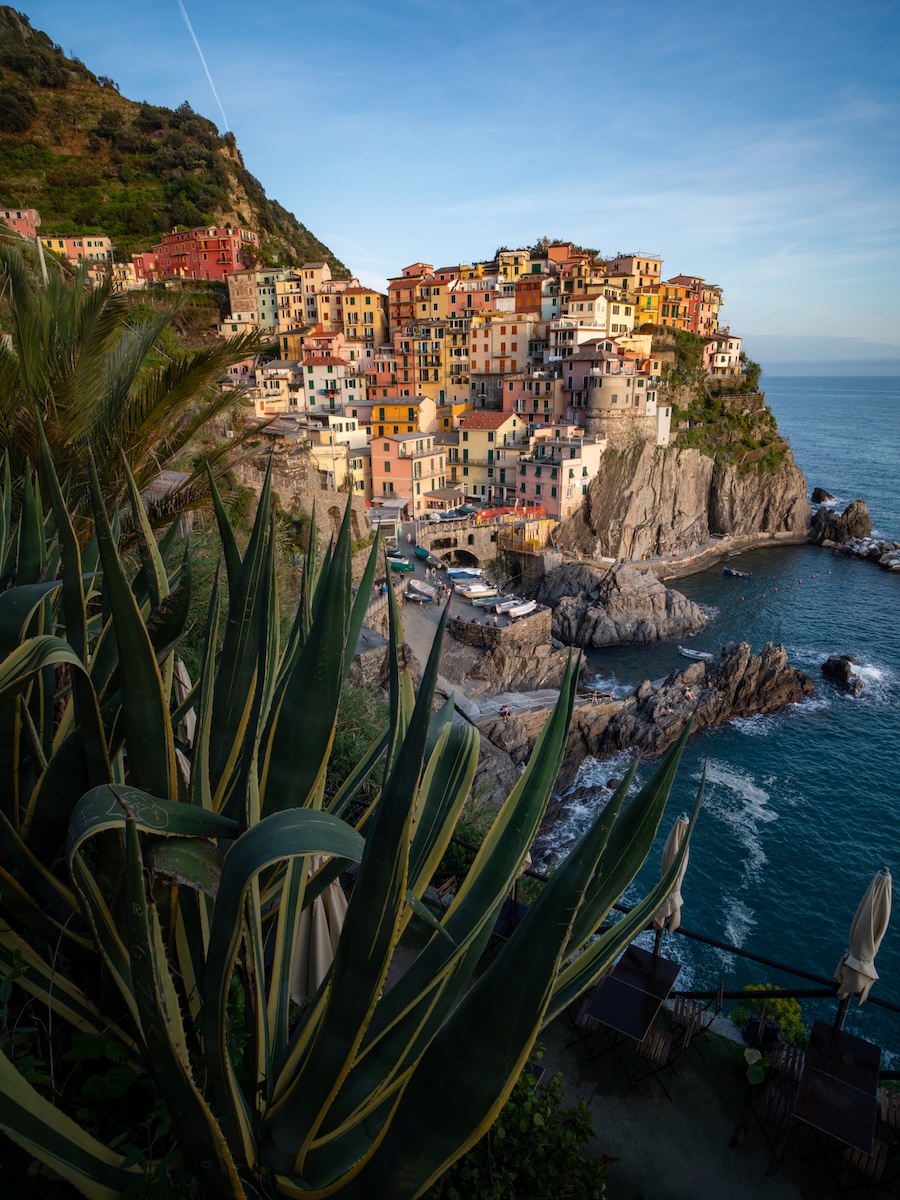
The following day, we parked in La Spezia and visited Riomaggiore and Manarola by train. All three villages we explored offer iconic photography opportunities, but Manarola emerged as my clear favorite with its dramatic vineyard terraces and the classic shot of colorful houses cascading toward the sea. We deliberately skipped the remaining two villages (Monterosso and Corniglia) as they appeared less photogenic based on our research—a decision that allowed us more time to properly appreciate our chosen destinations.
This marked my second visit to Cinque Terre, having first explored it in 2010 when crowds were significantly smaller. Comparing photographs from both visits, I was amazed to discover that some houses had actually changed colors over the years, reflecting the ongoing maintenance and evolution of these living villages.
One note of caution: the food quality in Cinque Terre didn’t match the excellence we experienced elsewhere in Italy. The combination of captive tourism and high visitor turnover seems to have impacted culinary standards, so manage expectations accordingly.
Tuscany: The Heart of Renaissance Italy
Tuscany stands as Italy’s cultural and artistic heartland, renowned worldwide for its Renaissance cities, rolling countryside dotted with cypress trees, exceptional wines, and culinary traditions that have influenced global cuisine. This central Italian region encompasses everything from Florence’s artistic treasures to Siena’s Gothic magnificence, from Chianti’s vineyard-covered hills to the thermal springs that have attracted visitors since Roman times. Tuscany represents the Italy of our collective imagination—where art, history, gastronomy, and natural beauty converge in perfect harmony.
Our Tuscan journey took us through an impressive collection of both renowned cities and hidden gems, each offering its own distinct character and attractions.
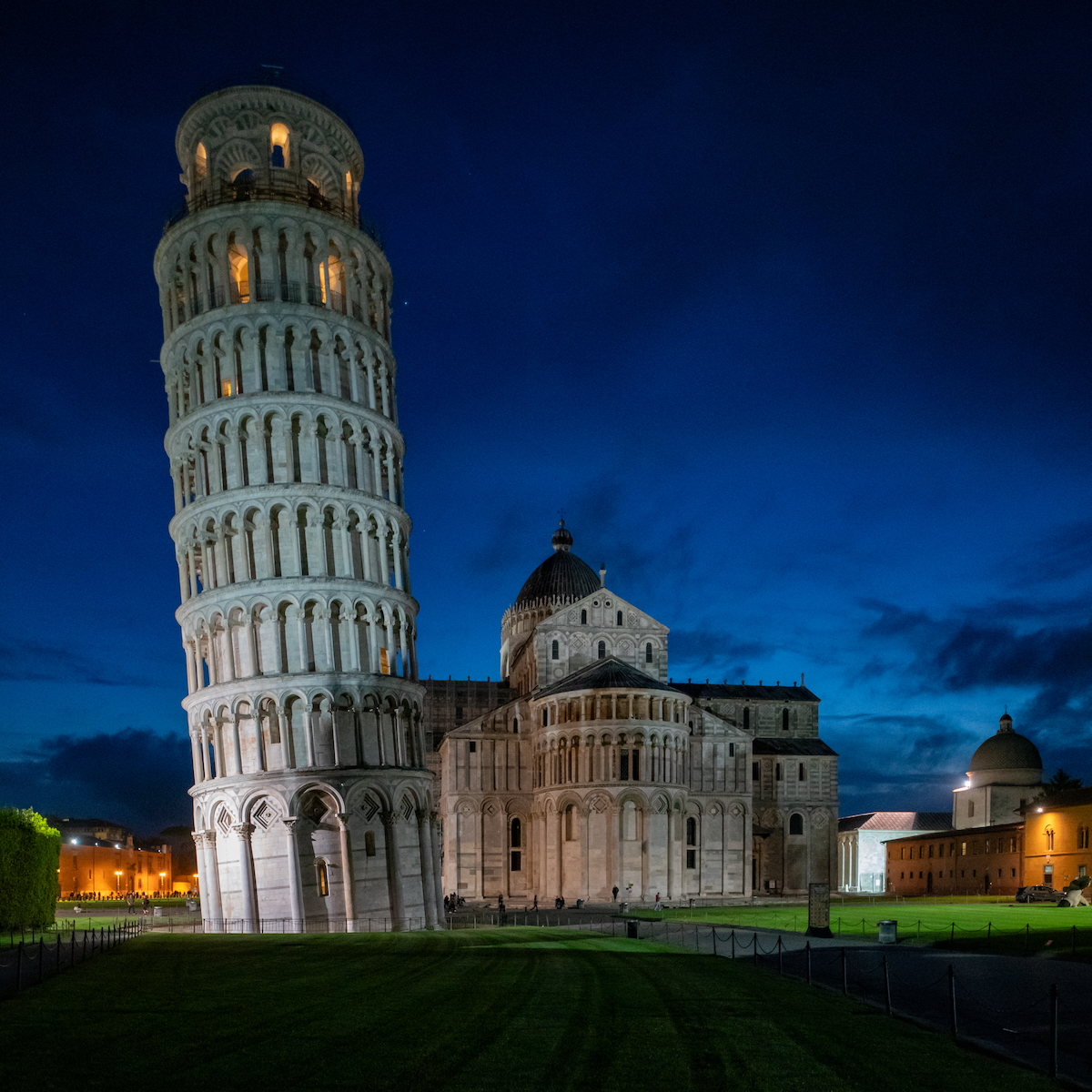
Pisa served primarily as a meeting point with a friend, though the iconic Leaning Tower proved even more dramatically tilted in person than photographs suggest. The tower, part of the remarkable Piazza dei Miracoli complex, offers the classic photo opportunity, but the city itself has limited additional attractions for extended stays. When visiting the Leaning Tower of Pisa, you can’t help but notice scores of tourists posing for the most cliché travel photo of all times; pushing the Leaning Tower. Oh well.
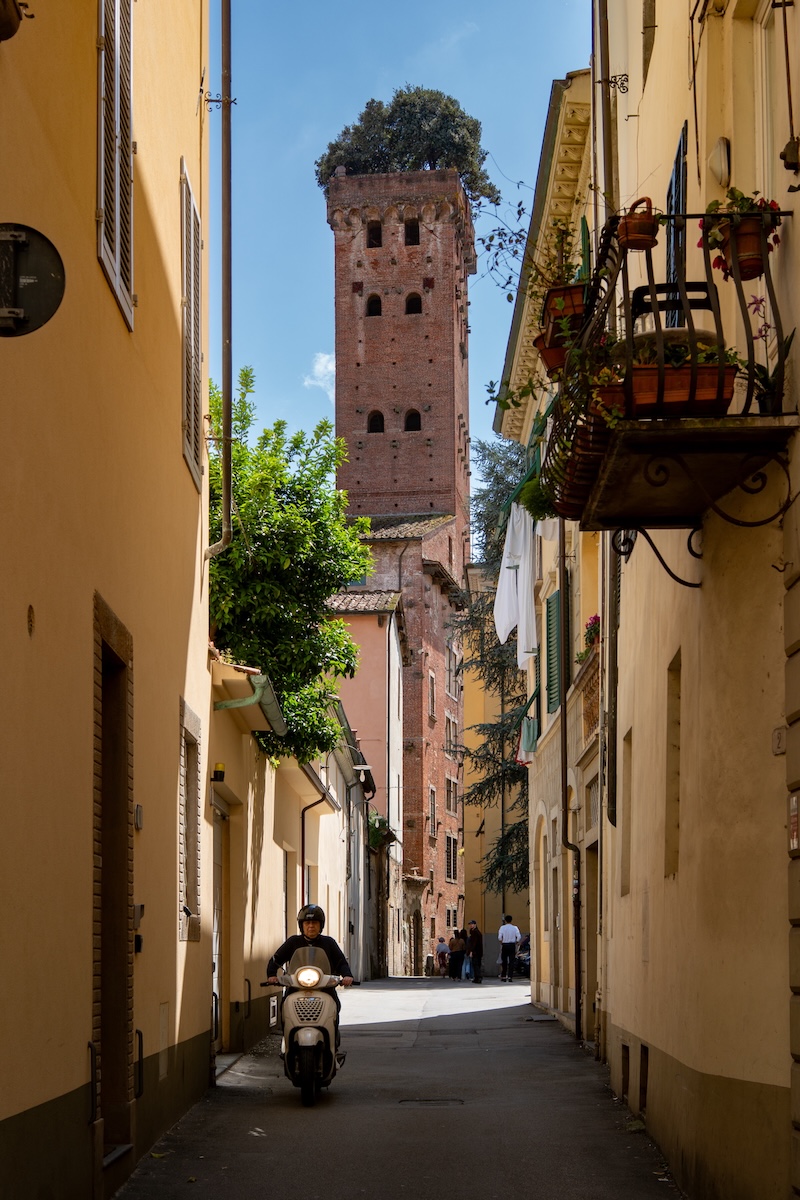
Lucca emerged as one of our trip’s greatest surprises—an off-the-beaten-path Tuscan gem that deserves far more recognition. The highlight was lunch at the extraordinary Piazza dell’Anfiteatro, built directly on the remains of a Roman amphitheater, creating a unique oval-shaped piazza that feels like dining within ancient history. The entire old town, encircled by remarkably intact Renaissance walls that now serve as a elevated walking path, charmed us with its authentic atmosphere and lack of overwhelming crowds.
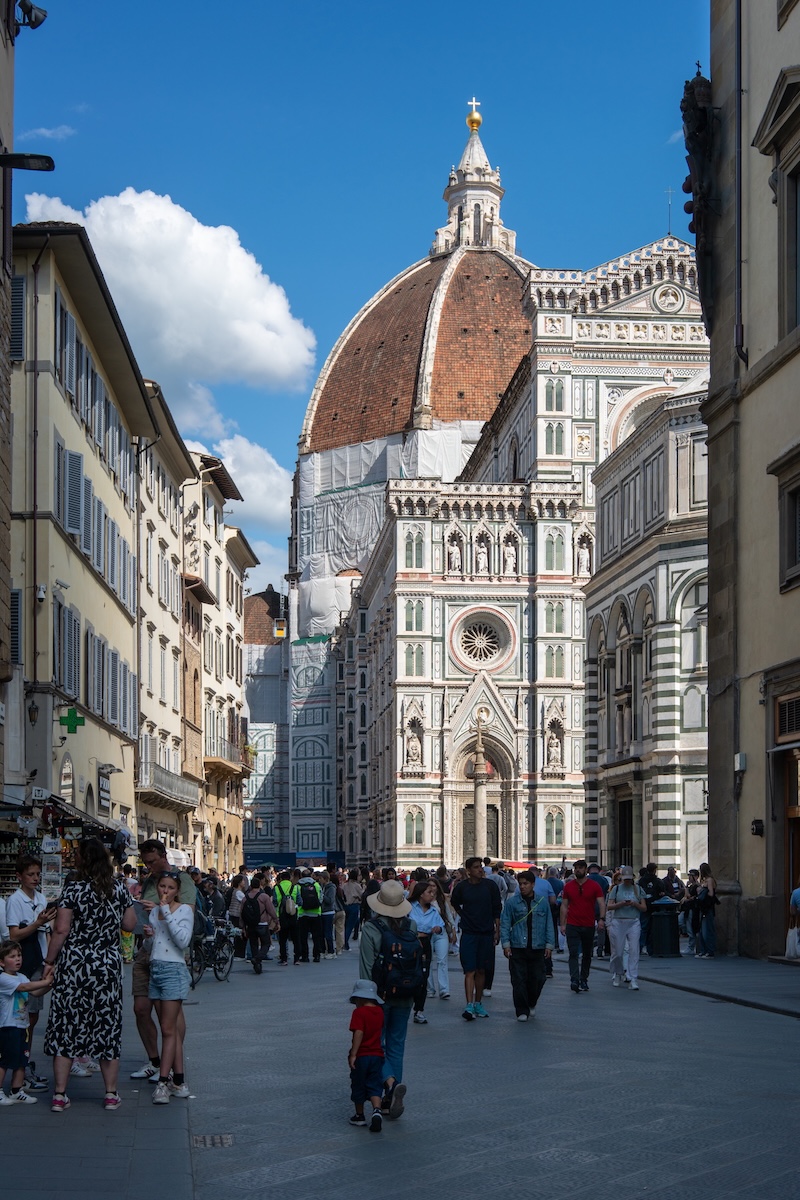
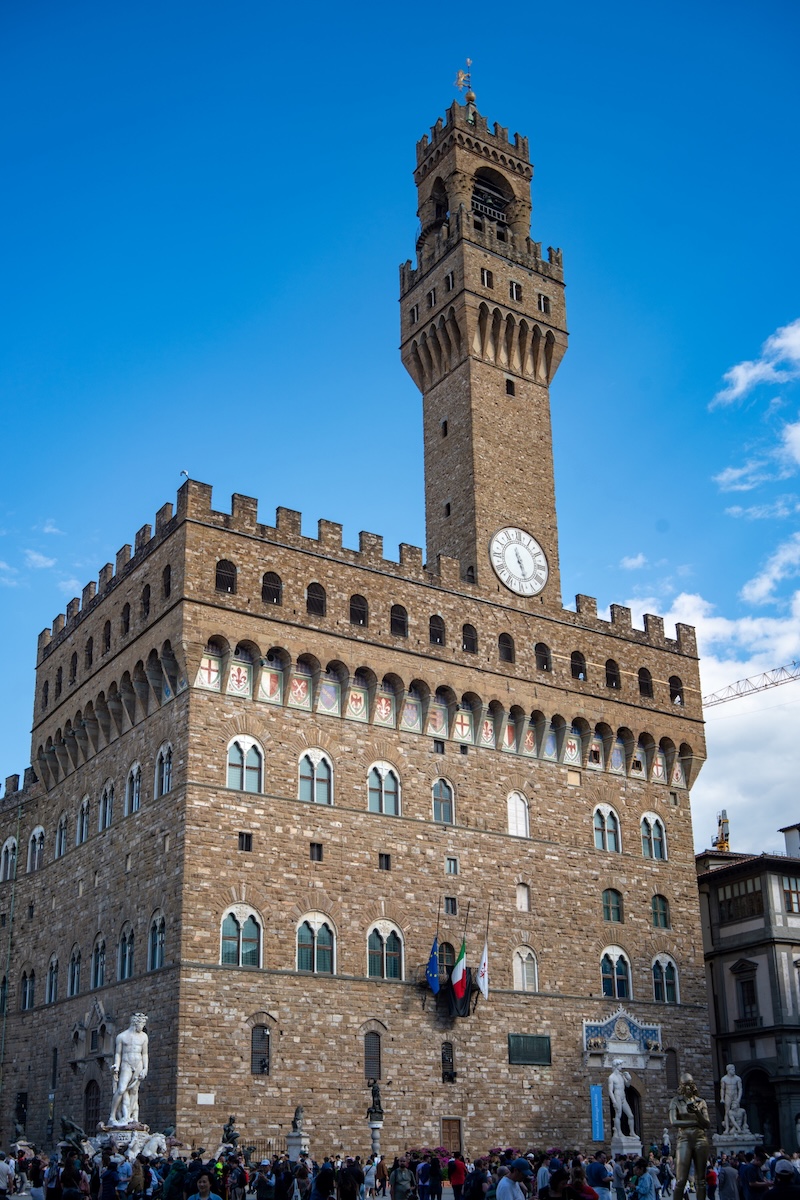
Florence, Tuscany’s most famous destination, certainly merits its reputation as the cradle of the Renaissance, housing incredible artistic treasures including Michelangelo’s David, the Uffizi Gallery’s masterpieces, and Brunelleschi’s revolutionary dome. However, the city’s popularity creates significant challenges—massive crowds, high prices, and a sometimes overwhelming tourist atmosphere. We stayed in nearby Prato and took the train into Florence, planning two full days of exploration. The crowds proved so intense that we cut our Florence visit to just half a day, instead spending our remaining time enjoying Prato’s small-town charm, local shopping, and excellent restaurants. This decision reminded us that sometimes the most memorable travel experiences come from embracing unexpected discoveries rather than checking off obligatory tourist boxes.
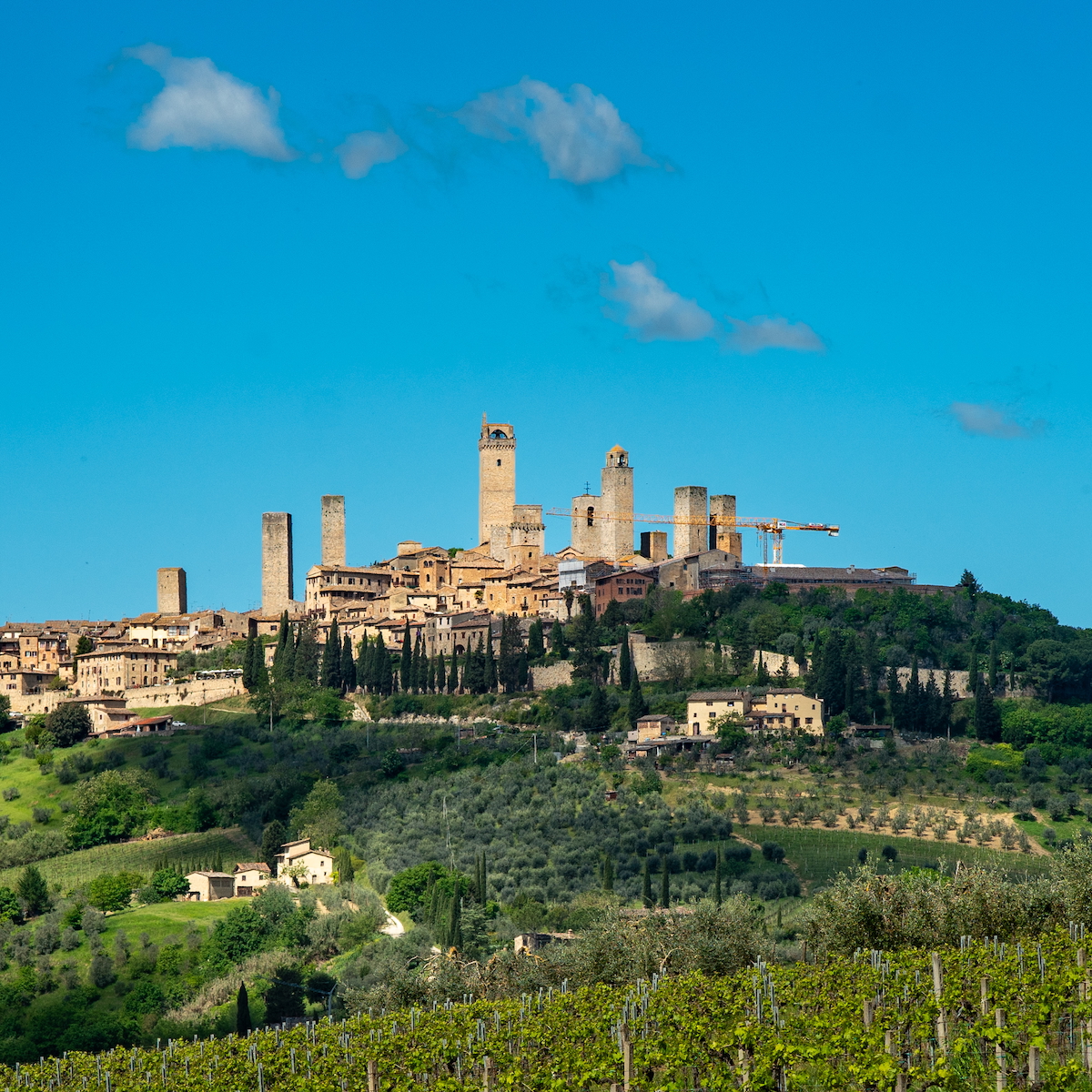
San Gimignano, the so-called “Manhattan of the Middle Ages,” presents a remarkable skyline of medieval towers that once numbered over 70 (14 remain today). This UNESCO World Heritage site certainly merits a visit for its unique architecture and well-preserved medieval atmosphere, though expect significant crowds and challenging parking. The key to appreciating San Gimignano is finding external vantage points for photography—the hilltop town looks most spectacular when viewed from surrounding valleys.
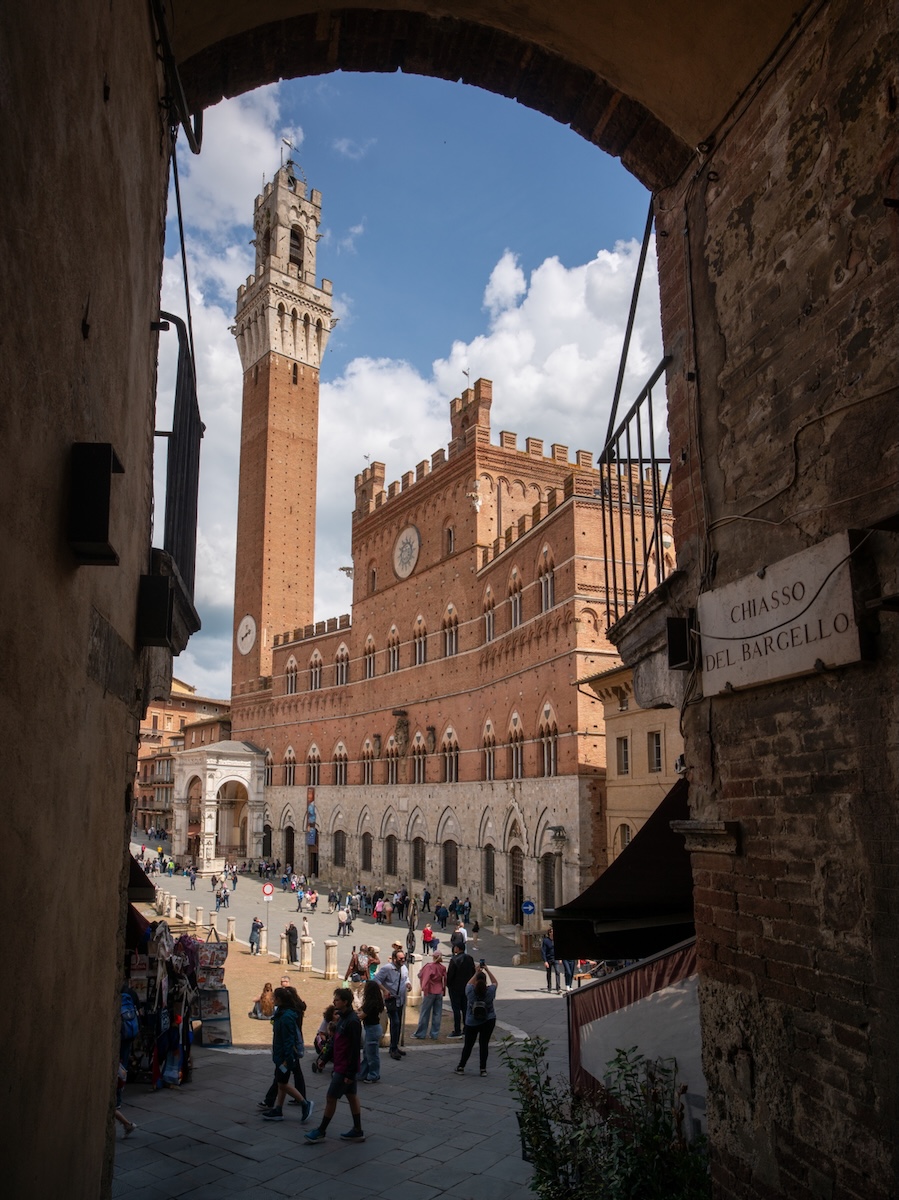
Siena claimed our hearts as Tuscany’s most captivating major city, combining architectural magnificence with a more manageable tourist atmosphere than Florence. The breathtaking Piazza del Campo, one of Europe’s greatest medieval squares, serves as the heart of city life and the famous Palio horse race venue. Siena’s Gothic cathedral, narrow medieval streets, and authentic neighborhood life create an immersive historical experience without Florence’s overwhelming crowds.
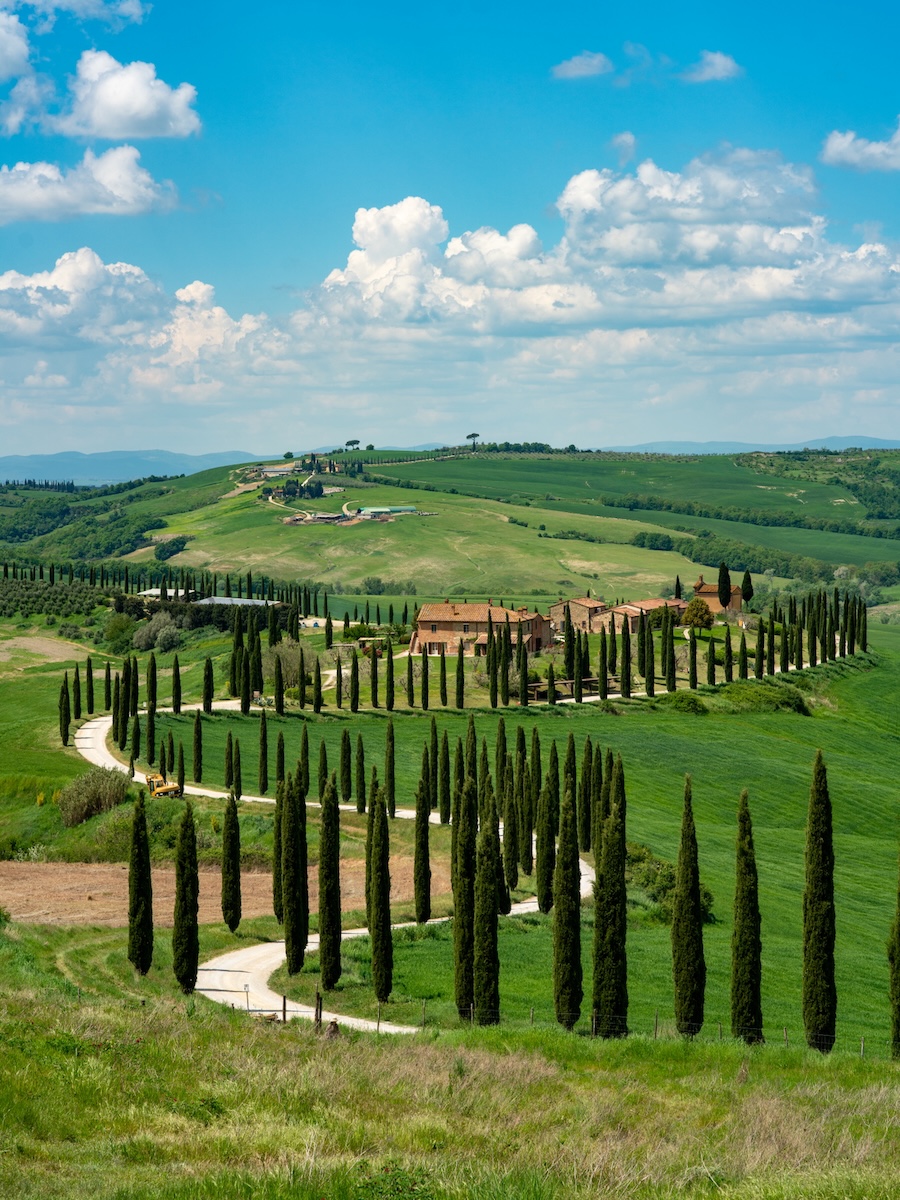
Val d’Orcia represented our journey’s visual crescendo—a UNESCO-listed region famous for its quintessentially Tuscan landscape of rolling hills, cypress-lined roads, and perfectly positioned farmhouses that have graced countless photographs and films. While Instagram has certainly increased visitor numbers to iconic viewpoints, the region’s beauty remains genuinely breathtaking. We based ourselves in an agriturismo for three nights, allowing daily exploration of charming hilltop towns including Montalcino, Asciano, Montepulciano, and Pienza.
Tuscany’s thermal springs tradition dates back to Roman times, and we chose to experience Bagno San Filippo, a natural hot springs complex where mineral-rich waters have created stunning white limestone formations resembling frozen waterfalls. These springs, heated by geothermal activity deep beneath the earth, maintain temperatures around 48°C (118°F) year-round. The mineral deposits have formed spectacular travertine pools where visitors can soak in naturally heated waters while surrounded by forest. The experience combines relaxation with natural wonder—highly recommended for anyone seeking rejuvenation amid Tuscany’s countryside. Best of all, it is free to visit!
The Final Leg: Friends, Micro-Nations, and Hidden Gems
Our journey’s conclusion involved a strategic detour to visit friends in Rimini, breaking the long drive back to Bergamo into two manageable segments: Val d’Orcia to Rimini, followed by Rimini to Bergamo with strategic stops along the way.
Val d’Orcia to Rimini
The four-hour drive northeast provided an exciting opportunity to visit San Marino, one of Europe’s smallest and most unique countries. This ancient republic, entirely surrounded by Italian territory, covers just 61 square kilometers (24 square miles) and has maintained its independence for over 1,700 years, making it one of the world’s oldest surviving sovereign state.
San Marino’s history traces back to 301 AD when Saint Marinus, a Christian stonecutter fleeing religious persecution, established a small community on Mount Titano. The republic’s strategic hilltop location and diplomatic neutrality allowed it to survive the rise and fall of empires around it, including Napoleon’s campaigns and both World Wars. Today, it operates as a parliamentary republic with its own government, postal system, and even mints its own euros, though it’s closely integrated with Italy economically.
Geographically, San Marino occupies the slopes and summit of Mount Titano, with the capital city (also called San Marino) perched dramatically at 750 meters above sea level. The country consists of nine municipalities, with medieval castles and fortifications crowning the mountain’s three peaks creating one of Europe’s most recognizable skylines.
Our brief lunch visit revealed the curious reality of this micro-nation: there are no visible borders with Italy, no welcome signs, and the transition feels seamless. The only noticeable differences were slightly cheaper gas prices and distinctive blue backgrounds on pedestrian crossings—subtle reminders that you’ve technically entered another country. While the novelty of visiting the world’s fifth-smallest nation was entertaining, the experience feels more like visiting a particularly well-preserved Italian hilltop town than crossing an international border.
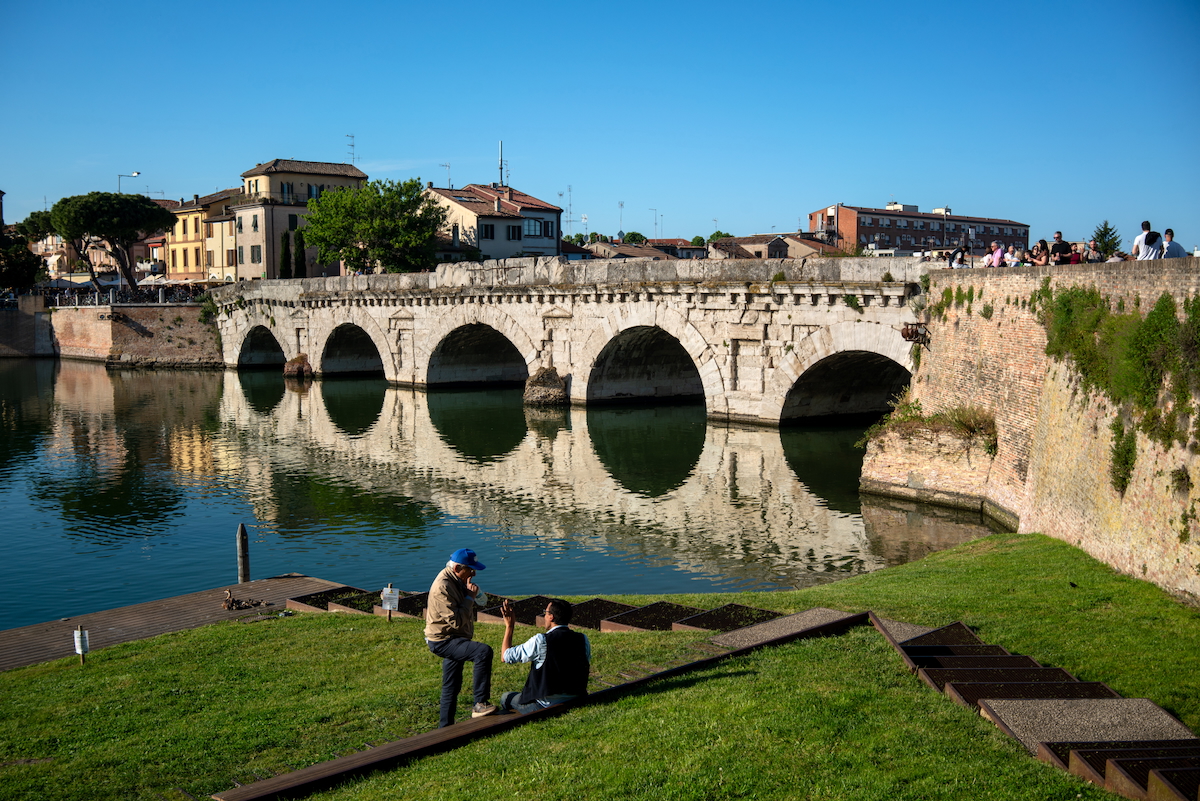
Reuniting with friends in Rimini provided a perfect opportunity to explore this Adriatic coastal city’s historic center. The most remarkable structure is the Ponte di Tiberio, an extraordinary testament to Roman engineering prowess. This fully functional bridge, built during Emperor Augustus’s reign over 2,000 years ago, continues to serve pedestrians and cyclists daily (cars were permitted until 2019). Such an incredible feat of engineering by Romans!
Rimini to Bergamo
Our final day’s four-hour drive included two strategic stops that perfectly bookended our Italian experience with contrasting urban encounters.
Bologna, Emilia-Romagna’s vibrant capital and home to Europe’s oldest university, initially promised rich history and renowned cuisine. However, the city center proved overcrowded and somewhat underwhelming during our brief afternoon visit, perhaps suffering from post-Tuscany comparison or simply bad timing with weekend crowds.
Mantua provided a magnificent contrast and came highly recommended by Italian friends—advice that proved absolutely correct. This UNESCO World Heritage city, surrounded by artificial lakes created in the 12th century, remains surprisingly uncrowded despite its extraordinary attractions.
Mantua’s most impressive sights include the Ducal Palace complex, one of Europe’s largest royal residences, which served as the seat of the Gonzaga family for nearly 400 years. This vast complex encompasses over 500 rooms, gardens, courtyards, and galleries showcasing centuries of art and architecture. The palace’s Camera degli Sposi features Andrea Mantegna’s revolutionary frescoes, considered among the Renaissance’s most important artistic achievements.
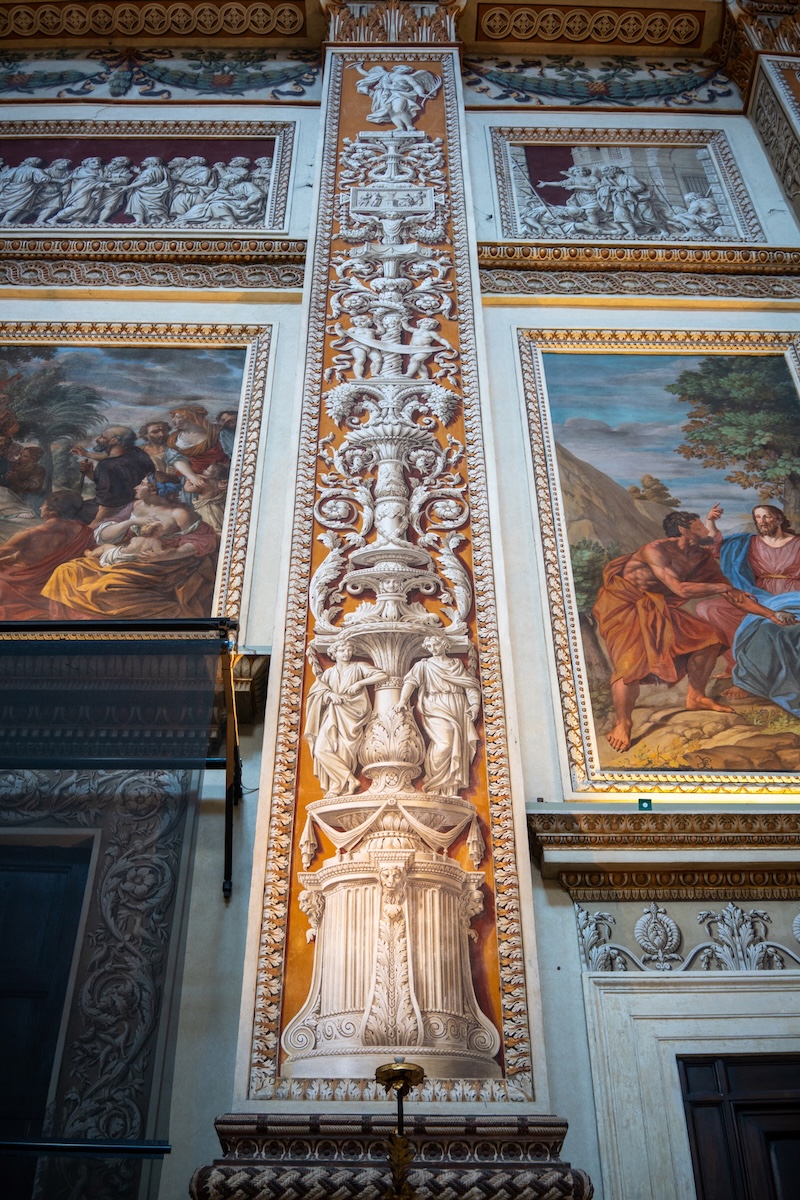
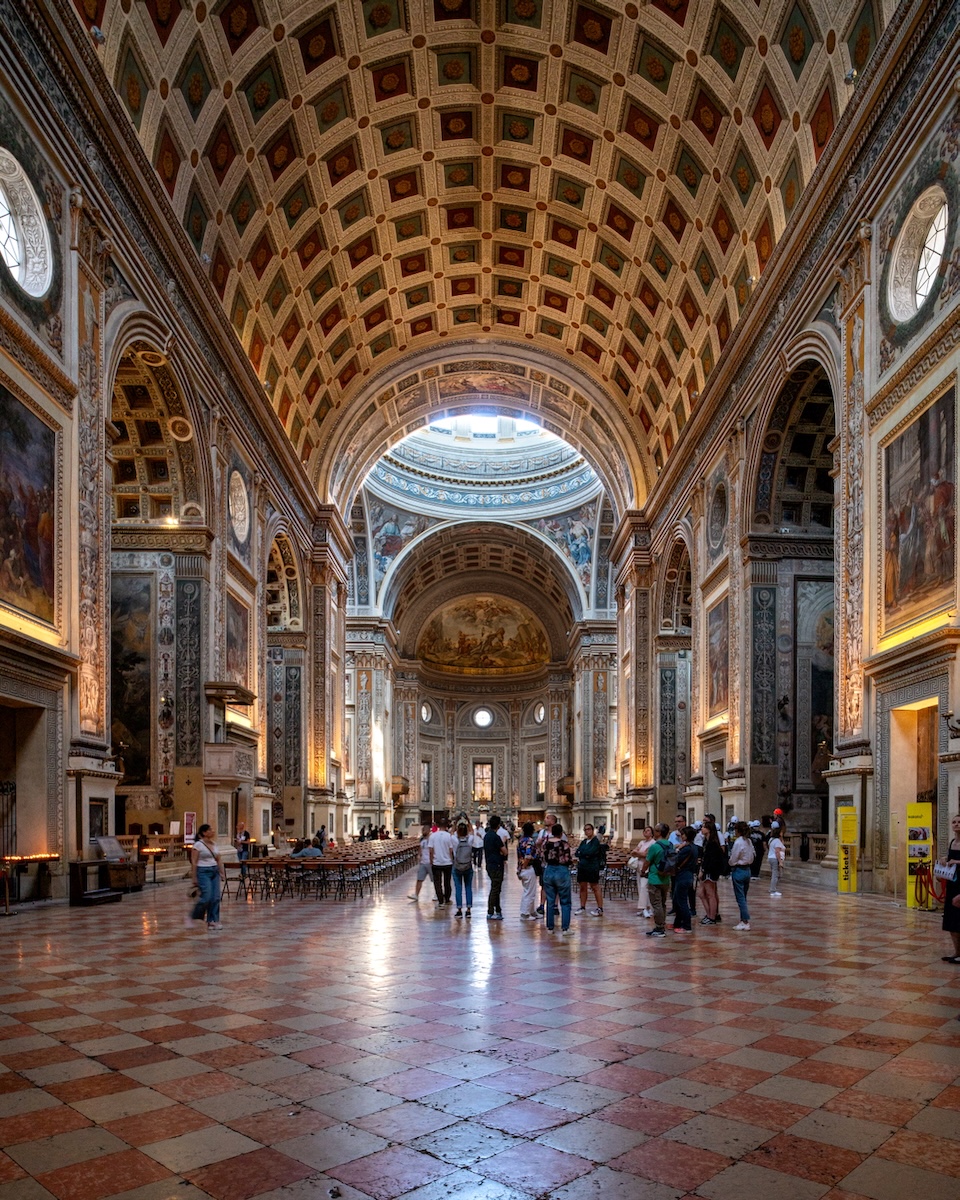
The Basilica di Sant’Andrea emerged as our visit’s absolute highlight, featuring one of the most spectacular church interiors I’ve ever encountered. The walls showcase extraordinary trompe-l’oeil paintings that create convincing three-dimensional effects through masterful use of shadows and perspective, making flat surfaces appear to have architectural depth and sculptural relief. This artistic technique transforms the interior into a mesmerizing blend of painting and architecture that must be seen to be believed.
Mantua’s relaxed atmosphere, combined with its remarkable artistic treasures and authentic Italian character, provided the perfect conclusion to our Italian odyssey before spending our final night near Bergamo Airport and catching our morning flight to Dublin.
FAQ
What are the essential tips for driving in Italy?
- Rent the smallest car that works for you, though not the mini ones, if you’re planning to drive on highways. Italian cities have narrow medieval streets and tight parking. A Toyota Corolla is almost a large car in Italy. Let that be a point of comparison for you!
- Budget extra for rental costs, which are higher than most European countries. Italy’s highways (autostrade) have extensive tolls, which can be paid with a credit card as long as you choose the correct payment lane.
- Italian drivers follow rules well but tend to tailgate, especially in passing lanes—but don’t let this intimidate you.
- Take advantage of AutoGrill rest stops for excellent coffee and food.
- Be very careful about ZTL (restricted traffic) zones in city centers, which use cameras to fine unauthorized vehicles—research these in advance and ask hotels about permits. We actually got a heavy ZTL ticket almost a year after our last road trip in Italy in 2022. In this trip, we were super cautious to not get another one.
- For parking, remember the color code: white lines are free, blue lines require payment, yellow lines are for residents only.
What are your best tips for road tripping with young children?
- Buy Bluetooth headphones for kids—audio entertainment works better than screens during long drives and reduces motion sickness, and eye strain.
- Stop every hour or so to let them stretch and burn energy.
- Engage them with verbal games, storytelling, and travel journals rather than relying solely on devices.
- Plan driving segments around their nap times when possible.
- Pack plenty of diverse snacks to keep moods stable and energy levels up throughout the journey.
These small investments in comfort and entertainment make the difference between a stressful drive and an enjoyable family adventure.
Final Reflections
This Italian journey reminded me why the country continues to captivate travelers from around the world. From Lake Garda’s dramatic mountain reflections to Val d’Orcia’s rolling hills, from Cinque Terre’s colorful villages to Tuscany’s Renaissance treasures, Italy offers an incredible diversity of experiences within relatively short distances.
Most importantly, this journey demonstrated that even after numerous visits to Italy, the country continues revealing new layers of beauty, history, and culture. Whether you’re drawn by artistic masterpieces, culinary excellence, natural beauty, or simply the Italian approach to living well, this remarkable country offers experiences that linger long after you’ve returned home.
The memories of morning light hitting Val d’Orcia’s cypress trees, the taste of authentic Tuscan wine in Montalcino, the awe of standing on a 2,000-year-old Roman bridge, and the simple pleasure of discovering Lucca’s hidden charms will undoubtedly inspire future Italian adventures. After all, as any Italy enthusiast knows, the question isn’t whether you’ll return to Italy, but rather which region you’ll explore next! And I know exactly where…