Jordan: Ancient Wonders and Stunning Landscapes
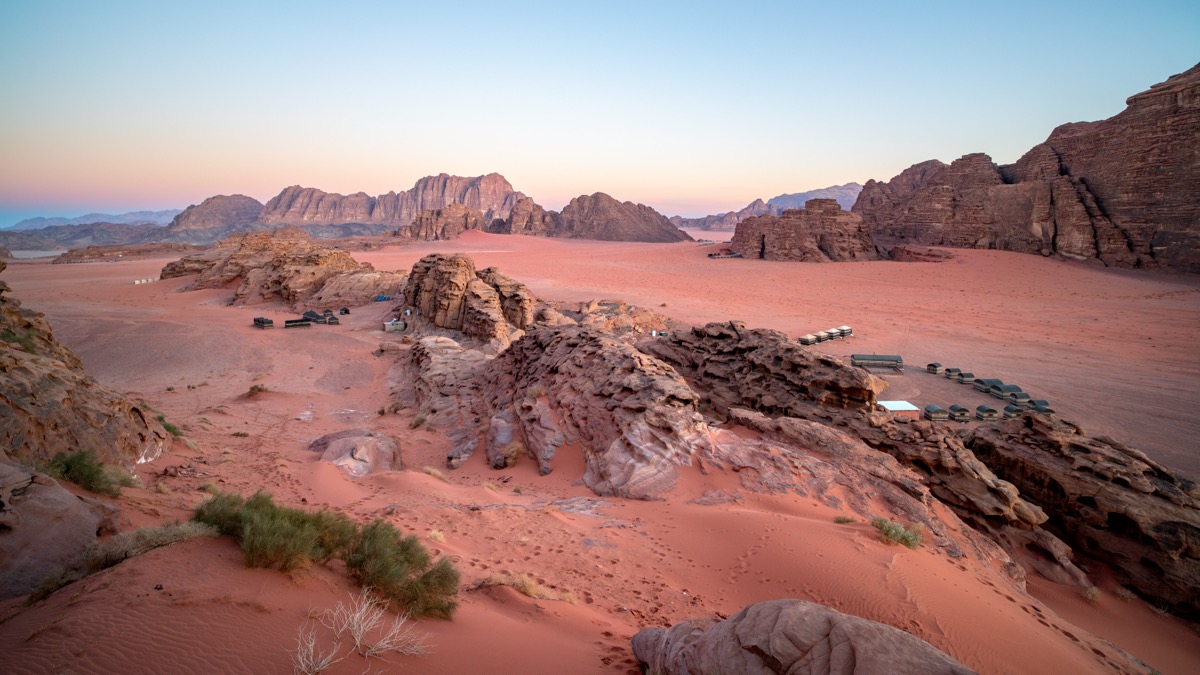
Jordan had been on my radar ever since I discovered Wadi Rum through movies like Star Wars and Dunes. Petra was another compelling reason to visit, so when we planned our trip to Egypt, I decided to add Jordan to our itinerary. I’m thrilled we did, because Jordan quickly became one of our favorite destinations during our short visit.
Geography and History of Jordan
Nestled in the heart of the Middle East, Jordan is a captivating country defined by its distinctive geographical and political landscape. Geographically, it ranks among the world’s driest countries, strategically positioned at the crossroads of Asia, Africa, and Europe. The country’s terrain is primarily desert, featuring rocky plateaus, mountain ranges, and the dramatic Great Rift Valley cutting through its landscape.
Historically, Jordan’s territory has been a cradle of ancient civilizations. From the Nabataean Kingdom that constructed Petra to the profound Roman and Byzantine influences, the land has been a melting pot of diverse cultures and civilizations. Its modern journey began after World War I with the establishment of the Emirate of Transjordan under British mandate, ultimately gaining full independence in 1946.
Unlike most of its neighbors, Jordan lacks oil reserves, which might seem like a disadvantage. However, this limitation has sparked remarkable innovation and resilience. The country has been compelled to develop creative economic strategies, investing heavily in human capital, education, and strategic international relationships. This approach transformed a potential challenge into an extraordinary opportunity for sustainable development.
The country occupies a unique position in the Middle East, playing a crucial humanitarian role by hosting numerous refugees from Palestine and Syria. With over 1.3 million Syrian refugees and a long-standing Palestinian refugee population, Jordan has demonstrated extraordinary compassion and resilience. This humanitarian commitment has become a defining characteristic of Jordan’s modern identity, showcasing the country’s ability to provide stability and support in a volatile region.
Jordan is renowned for its strategic neutrality, alignment with the United States, and progressive policies. While maintaining a peace treaty with Israel, Jordanian people strongly support the Palestinian cause, highlighting the country’s nuanced approach to regional politics. The current monarch, King Abdullah II, is particularly well-regarded both domestically and internationally. His leadership has been instrumental in maintaining Jordan’s stability, promoting moderate Islam, and balancing complex regional dynamics.
Logistics of Travel in Jordan
There are multiple places of interest in Jordan, from south to north:
- Aqaba and Red Sea: The coastal region offering marine activities and strategic economic importance
- Wadi Rum: The stunning desert landscape that has captured the imagination of filmmakers and travelers alike
- Petra: The iconic archaeological site and one of the New Seven Wonders of the World
- Dead Sea: The famous natural wonder with unique geological and health characteristics
- Jerash and Amman: The capital city and its nearby historical sites, offering a blend of ancient ruins and modern urban life
Jordan has two major international airports: Amman and Aqaba, which provide convenient entry points. The only way to travel around Jordan is by road. Renting a car is highly recommended for exploring the country, and driving around the country was a breeze, though driving in Amman can be challenging for first-time visitors. The road infrastructure is generally good, with well-maintained highways connecting major cities and tourist destinations.
The Jordan Pass is an essential tourist pass that covers entry to most archaeological sites, saving travelers money and administrative hassle. Plus, it covers the visa fee, so it is a no-brainer. For communication, local SIM cards like Zain or Orange offer affordable data packages, making it easy to stay connected throughout the journey.
Our Time in Jordan
We entered through Aqaba and exited from Amman airport, which worked out perfectly as we didn’t have to drive back to the same airport. Our itinerary was:
- Two nights in Aqaba
- Two nights in Wadi Rum
- One night in Petra
- Two nights in a Dead Sea resort
- Visited Jerash on the way to Amman
- Three nights in Amman
First Impressions of Jordan
- Arriving from the chaos of Cairo, Aqaba was such a stark contrast. The small airport and quiet, relatively empty city immediately caught our attention.
- Compared to Egypt, security measures were significantly fewer, though we still noticed plenty of security forces and checkpoints along the roads.
- The Jordanian dinar is strong, pegged at a ratio of 1:1.4 to the dollar.
- We enjoyed Jordanian cuisine, especially their national dish, Mansaf - a traditional delicacy of lamb cooked in a fermented dried yogurt sauce and served with rice.
- The low number of tourists in March surprised us, likely due to Ramadan and the cooler weather. Not that I’m complaining, of course!
Aqaba
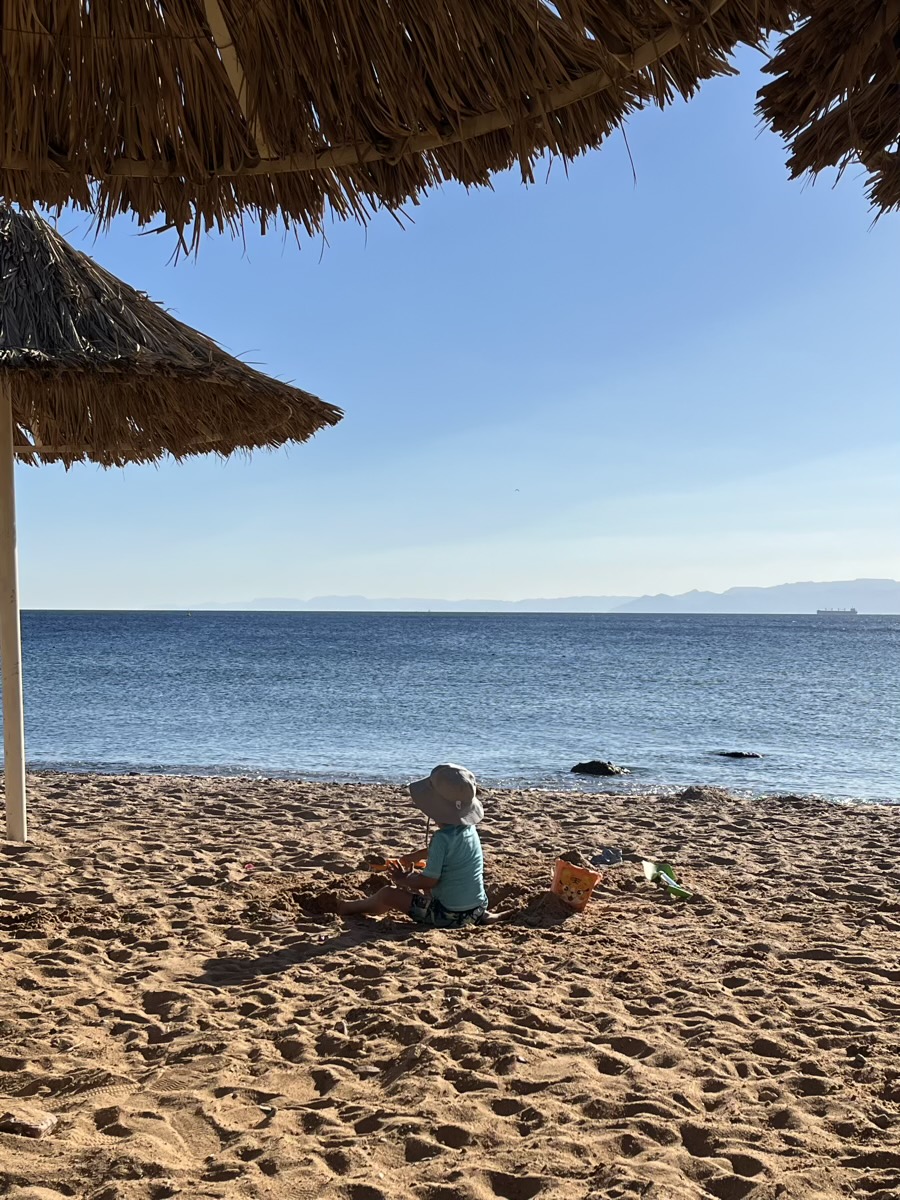
Aqaba is Jordan’s only port city, offering a unique vantage point where you can simultaneously see Saudi Arabia, Israel, and Egypt. The area is a paradise for snorkeling and diving enthusiasts.
We spent an entire day at Berenice Beach Club, where our son played in the sand to his heart’s content. The beach was nearly empty, giving us the feeling of a private retreat. I did some snorkeling near a pier and was amazed by the crystal-clear water. There were plenty of colorful fish and vibrant corals, but the water was a bit chilly.
Wadi Rum
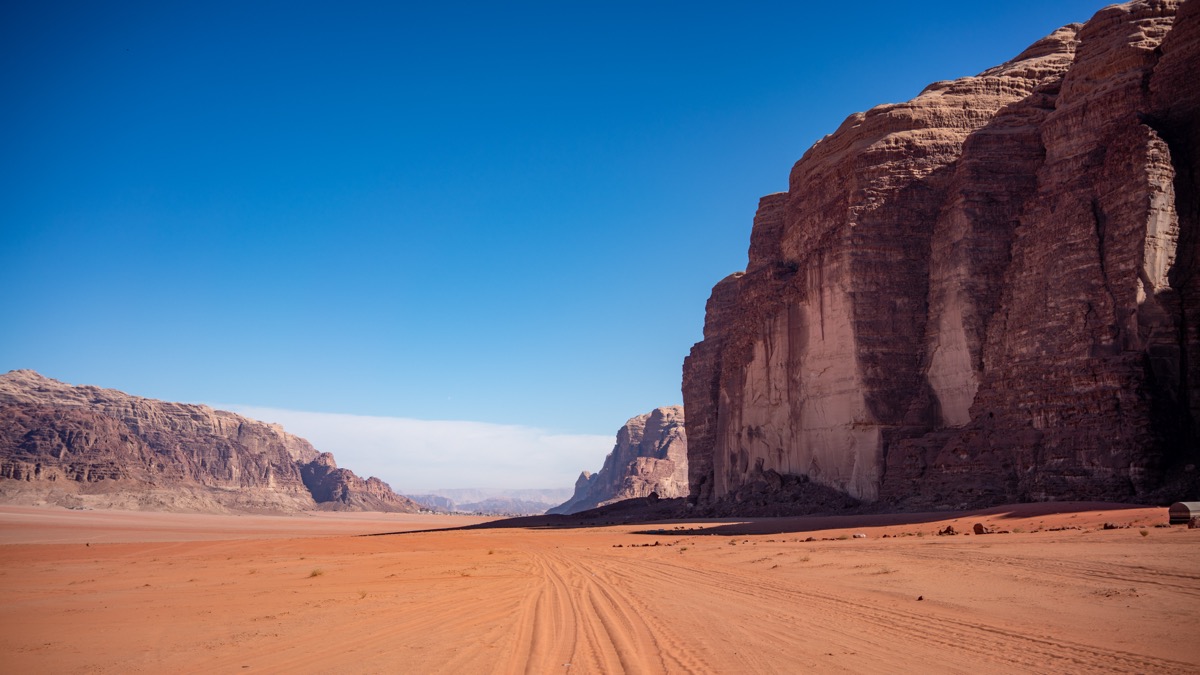
As I said in the intro, Wadi Rum was probably the most important reason for me for visiting Jordan, and I am happy to report that it did not disappoint!
We met our host at a predetermined point, who then picked us up in a 4x4. While Martian-styled camps were an option, we opted for a more authentic Bedouin camp experience. Wadi Rum is home to Bedouins, the traditional nomadic Arab people of the desert. Chatting with our Bedouin host and guide was certainly a highlight of our trip to Jordan. I just wish we had stayed at a true Bedouin camp for at least a night. I later realized that most Bedouins now live in the Wadi Rum village, and not in the desert, and in order to get to the desert camps, you have to go further out of the touristy area, and requires a longer stay.
Two-nights stay in Wadi Rum was perfect for us. The first day, we arrived in the afternoon, and relaxed for the rest of the day, and did some sunset photography near our camp. We then enjoyed a Bedouin-styled dinner in a large tent. We were lucky to be there on a clear night and no moon in the sky, so we did some star-gazing at night, though it gets chilly at night. Next day, we embarked on a full-day 4x4 tour, exploring multiple sites, accompanied by four other American tourists surprisingly living in Zambia. Their company made the day even more enjoyable.
Wadi Rum is a photographer’s dream, with its stark landscapes, dramatic rock formations, and red-colored stones and sand. The area boasts magical sunrises and sunsets, creating the best light for photography. It’s also incredibly quiet - perhaps the most serene place I’ve ever visited. I would certainly love to go back!
Petra
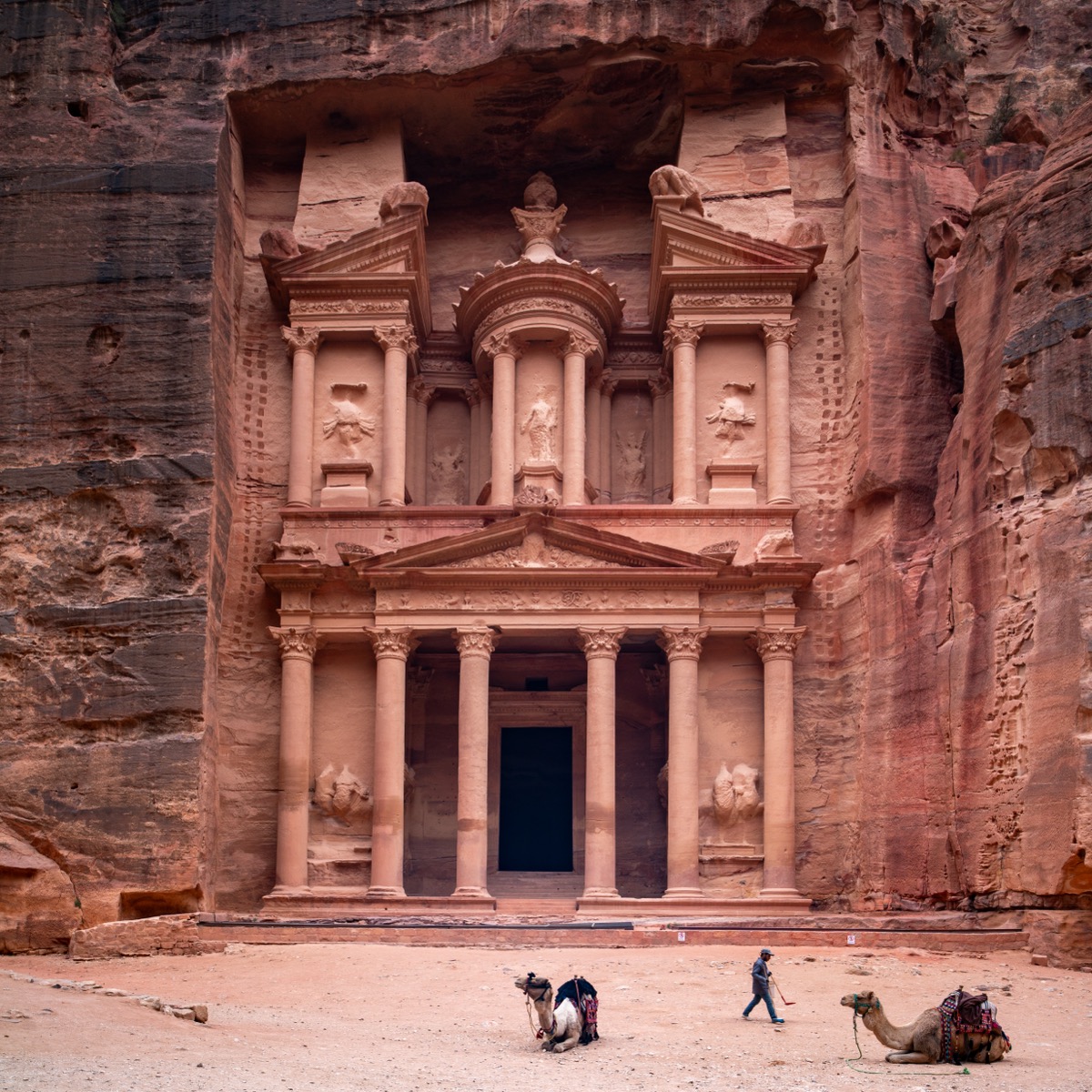
Petra was the capital of the Nabataean Kingdom and a major trade hub from the 4th century BCE to the 1st century CE. The Nabataeans carved impressive structures into the rock and developed advanced water systems. After its decline under Roman rule and a 4th-century earthquake, Petra was largely abandoned until its rediscovery in 1812 by a Swiss adventurer. Today, it is a UNESCO World Heritage Site and one of the New Seven Wonders of the World.
We arrived in Petra in the morning, checked into our hotel, and then set out to explore the site for half a day. Entering through the main gate, we walked through the narrow canyon leading to the Treasury. While the Treasury is what most people recognize, the archaeological site offers so much more.
We were fortunate to visit during a less crowded period, often finding clear shots of the Treasury without other tourists. Petra can get extremely crowded during peak season, so we were happy with our timing. I enjoyed taking pictures of the Treasury from different angles, and I made sure to include the two resident camels in front of the structure in some of my shots.
We walked all the way to the Roman Colonnade but skipped the hike to the Monastery, as it would have been too lengthy and would have required a return trek. My recommended approach is to park at the main entrance (which offers free parking), take a taxi to the other entrance, walk to the Monastery, and continue the one-way walk back to the Treasury and main gate through the Canyon.
The persistent offers of horse and donkey rides both outside and inside Petra were slightly annoying. However, a polite but firm “no thank you” was usually sufficient to deter these persistent guides.
Overall, Petra was definitely worth visiting, though the Treasury remains the most photogenic part, and the rest of the site was not as impressive.
Dead Sea
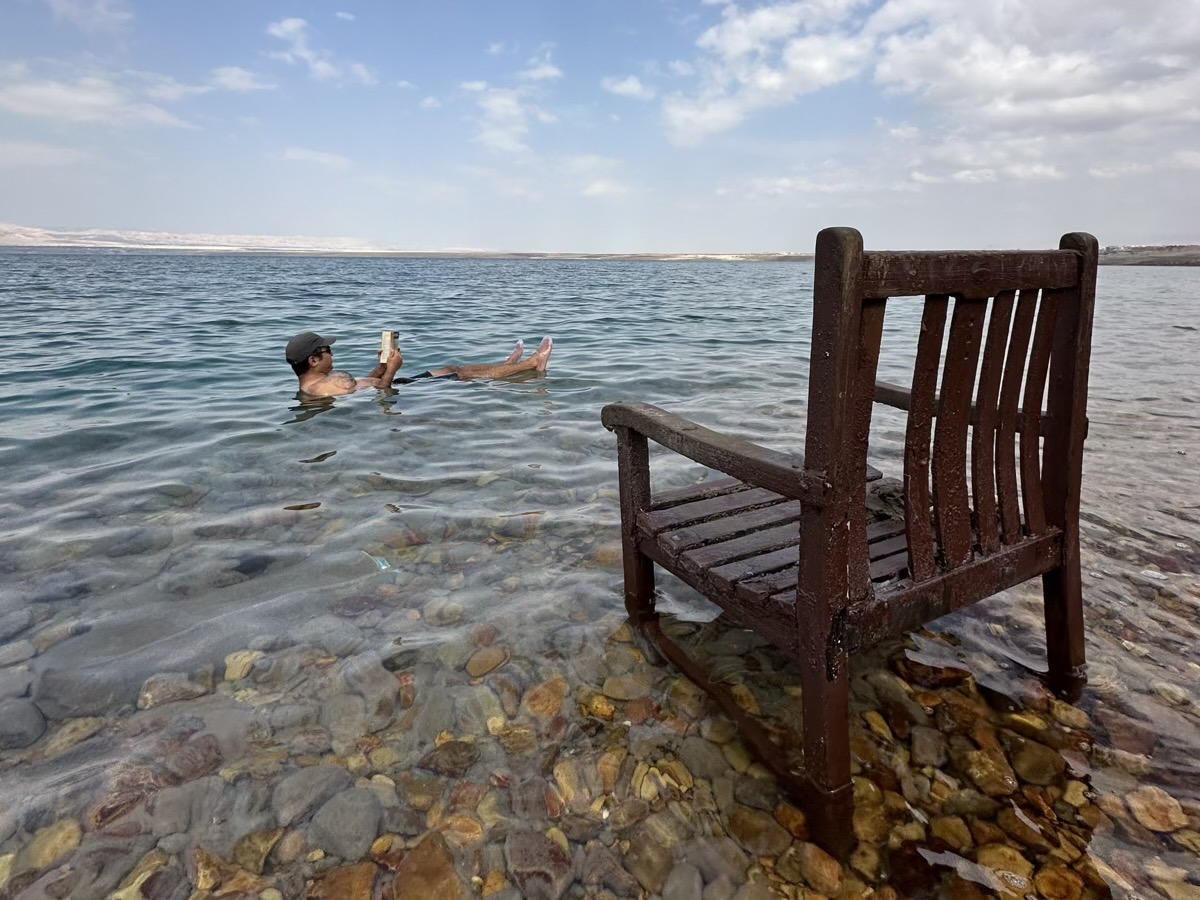
The Dead Sea, situated between Jordan and Israel, is one of the world’s saltiest bodies of water, with a salinity of 34% (that is 340 grams of salt per 1 liter of water). Its extreme salt concentration makes it nearly impossible for most life forms to survive, hence its name. Located about 430 meters below sea level, it’s the lowest point on Earth’s surface. The high mineral content of its water and mud is believed to have therapeutic properties, attracting visitors seeking health and skin treatments.
Initially, I was planning a half-day visit to simply dip in the water. However, a Jordanian friend highly recommended spending time at a resort, so we decided on two nights of relaxation. This turned out to be an excellent decision!
The Marriott Resort at Dead Sea was outstanding. We were fortunate to have the resort virtually to ourselves, with only a handful of other guests during our stay. The facilities were top-notch, and the hospitality was exceptional. We particularly enjoyed dining twice at Oak Tree Restaurant, which offered excellent cuisine and fantastic service.
Floating in the Dead Sea is a unique experience. The water’s density is about 25% higher than regular seawater, making you incredibly buoyant. Normally, I would sink when floating vertically in a pool or sea. But in the Dead Sea, I effortlessly floated almost up to my chest! We even recreated the classic reading a book while floating photo.
However, I discovered an unexpected challenge: staying stable while floating. Despite keeping my head above water, I found myself prone to flipping over, which resulted in some painful scrapes from the rough rocks in the shallows. I washed the cuts with clean water, but they were quite gnarly.
Tips and tricks for dipping into the Dead Sea
- Wear water shoes—the rocks are sharp.
- Bring disinfectant and bandages—scrapes and cuts burn like crazy.
- Shower afterward—the salty water is harsh on your skin.
- Plan your entry point—the shoreline is often much lower than the surrounding area. Resorts have private beaches, but public access points can be tricky to find.
Jerash and Amman
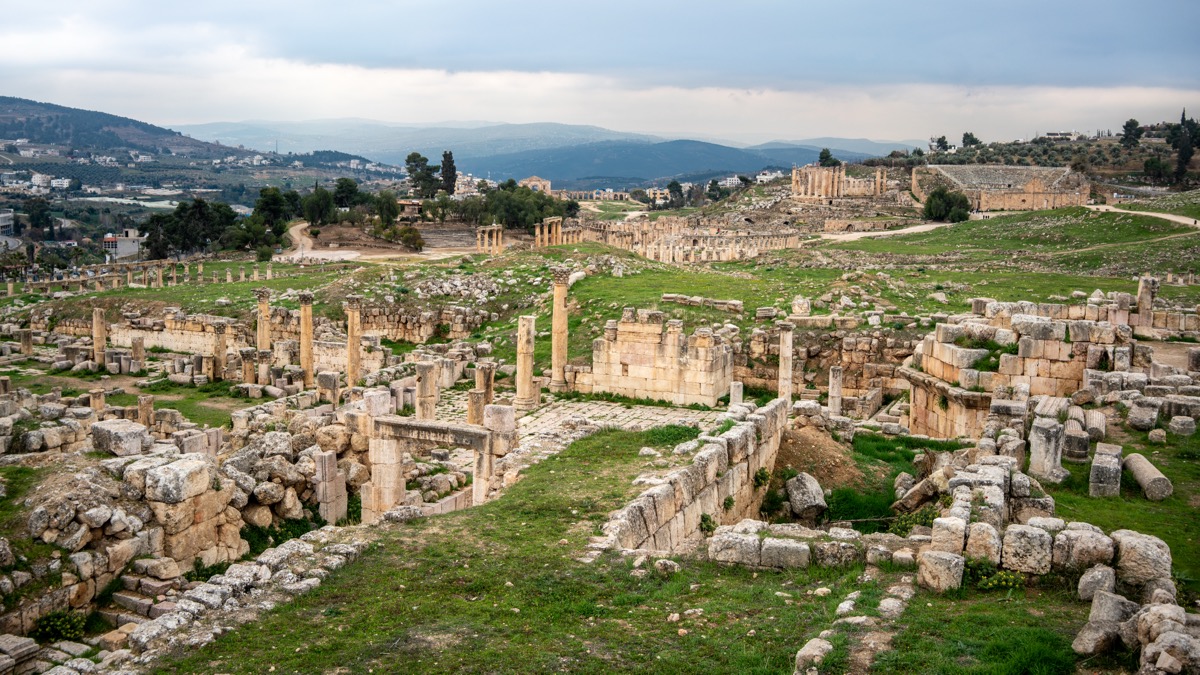
We reluctantly left the comfort of the Marriott Resort to continue our journey to Amman for our final three nights in Jordan. We stopped at Jerash, a well-preserved Roman archaeological site, along the way.
Known as “Gerasa” in antiquity, Jerash was part of the Decapolis, a group of ten Roman cities in the region. The site boasts impressive ruins, including the Oval Plaza, the Corinthian-columned Temple of Artemis, and the well-preserved Hadrian’s Arch, built to honor Emperor Hadrian’s visit in 129 AD. Its colonnaded streets, theaters, and ancient hippodrome offer a fascinating glimpse into daily life during the Roman era. I enjoyed visiting Jerash, as you could almost get a sense of how life was during Roman period, with the layout almost fully preserved. The buildings were not as well-preserved as Pompeii, of course, but Jerash was certainly much grander than Pompeii in its heydey, as evidenced by its large temples and public buildings.
We arrived in Amman and spent our first day relaxing, celebrating our son’s birthday in the hotel. When traveling extensively, it’s crucial to occasionally slow down and take a break, especially for occasions like that. Last year, we were in Cambodia for his birthday, and we did the same. This little traveler of ours has spent a considerable amount of his life so far traveling! We are so proud of him!
We were fortunate to have a local connection - the brother of our Jordanian friend in Seattle - who showed us around and provided insights into everyday life in Jordan. We were grateful for his personalized tour.
We visited the Citadel, which was similar to Jerash but smaller and less well-preserved, and the Roman Theater. While Amman is Jordan’s capital, there isn’t much for tourists to do, so in my opinion, it’s not a must-visit destination if you are short on time.
Wrap-up
Our 9-day journey through Jordan came to an end as we flew to Emirates for a short stay before heading to Iran to visit family. We loved Jordan and confidently recommend it as a memorable travel destination. Petra, Wadi Rum, the Dead Sea, and Jerash are absolute must-visit locations, and the warmth of Jordanian people is unforgettable.
FAQ
How was visiting Jordan in Ramadan?
We arrived in Jordan on the first day of Ramadan, so the entire trip coincided with this holy month in the Islamic calendar when Muslims fast from dawn to sunset. Ramadan might not be the ideal time to visit many Muslim countries, Jordan included, as most restaurants close during breakfast and lunch hours.
Our hotel breakfasts solved morning meal challenges, but finding lunch was difficult. In Petra, for example, our hotel manager warned us that no restaurants would be open for lunch, forcing us to buy canned food from a grocery store and eat in our room. The silver lining? Fewer tourists during this period, which might appeal to those seeking a quieter travel experience. So afterall, it was a win for us!
How do Egypt and Jordan compare as tourist destinations?
Although Egypt and Jordan are nearly neighbors, they offer vastly different experiences. Egypt has a much higher population density, especially in Cairo, which dramatically affects the travel experience.
Egypt undoubtedly offers more tourist attractions. From the Pyramids to the temples and tombs of Luxor and Aswan, no other destination matches Egypt’s archaeological and historical richness.
Jordan, however, is much easier to navigate. Renting a car and exploring is straightforward - something I wouldn’t recommend in Egypt. One significant advantage of Jordan was the absence of tipping expectations, making interactions with locals much more comfortable and genuine.
For experienced travelers, Egypt can be a budget-friendly destination. However, for those seeking organized tours or cruises, Egypt can become quite expensive. Jordan wasn’t particularly cheap but also didn’t break the bank.
Overall, if you are a history buff, and you seek grand ancient archeological sites, you’ve got to visit Egypt. But if you want a bit of history, along with amazing landscape, and a more relaxed travel experience, Jordan is a better bet. But to be honest, you should visit both, as we did!