Scandinavia: Norway, Sweden, and Denmark

In the last leg of our trip, we visited Norway, Sweden and Denmark, before heading back home. I had long wanted to visit Norway for its breathtaking scenery, and we decided to combine the trip with a visit to Copenhagen to meet a couple of old friends, and since we wanted to travel by train, we had a short stop in Sweden. This was our first trip to this region, and we were highly looking forward to it.
Norway

Bergen was our first stop in Norway. Bergen is a picture-perfect city located in western Norway, and is known as the gateway to the fjords. When flying in, you see hundreds of little islands and jagged coastlines in this part of the country. Fun fact, despite its moderately small size, Norway has one of the longest coastlines in the world. Arriving at the Bergen Airport, you quickly notice how clean, new, and well-organized everything is, and this impression held true during the whole trip.
We stayed a little outside the city center, but thanks to excellent transportation, we easily got to Bryggen area everyday, which served as the center of our activities. I loved taking photos of the colorful row of houses in Bryggen in different lighting conditions. They are super photogenic! There was also a daily market at the port, where you could have good seafood, and exotic dishes like moose burger (which has probably 10% or less actual moose meat), and even whale steak. As much as I like trying new meat, I couldn’t bring myself together to try whale steak, as I am vehemently against hunting whales. Norway, and other Scandinavian countries, have a long history with hunting whales.

One of the best things you can do in Bergen is doing a fjord boat tour. To get to the most amazing fjords, however, you need to do a 10-12 hour long tour, which was not doable for us. So instead, we did a 3-4 hour tour to Mostraumen, which was totally worth it.
When planning the Norway trip, I initially wanted to get to Oslo by train, but the train ride was a grueling 7-8 hours in total. Our experience showed that more than 3-4 hours, the train ride become really hard with our son, so we changed our plans. Instead, we took a ferry to visit Stavanger for a few days, and then flew to Oslo.
The ferry to Stavanger was probably the best mode of transportation we experienced during the trip. The ferry was basically like a small cruise ship, we many levels, restaurants, decks, and even two playgrounds. Our son loved the 4 hour ferry ride as he was constantly playing in the playground, and we enjoyed the scenery, as the ferry meandered between the islands through the inshore waters.


Stavanger is another southwestern Norwegian city in the fjord country, with a compact old town, and great possibilities for hiking. We were hoping to do Pulpit Rock hike, which is one of the most famous hikes in Norway, but after careful consideration, we decided against it. We did not have hiking gear, and segments of the hike can be dangerous in slippery conditions. Besides, I had to carry our son on my back for 6 hours or so, and I’m sure neither of us would have enjoyed it. Our son loves to run around these days, so he won’t be happy strapped and staying put for hours long. When you travel with a baby, you have to compromise.
Instead, we spent our time in Stavanger walking around the city center, visiting Sverd i Fjell, which is a monument of three large swords in stones, signifying the unification of Norway in a historic battle, and visiting an iron-age farm, and the archeological museum. The iron-age farm is a reconstruction of a farmstead in Stavanger area around the period 350-550 AD. It was interesting to see how people used to live in that time, and I got to discuss the details with the in-house guide. Mind you, this is the time period well-passed the golden era of Roman Empire, and yet, the people in this region were living the most basic life. Norwegians got a late start in civilization, because for the most part, that region was uninhabitable due to weather conditions, and it took a long time for humans to grow foothold in this region. The archeological museum was a great place to learn about the history of Vikings, and how their everyday life looked like, though I was a bit disappointed that they didn’t have a Viking ship in display. More on Vikings later.

We spent our last days in Norway in Oslo, where we met up with a childhood friend mine after many years. One thing I loved about this trip was reconnecting with old friends in different countries. Oslo is home to many museums, namely the new National Museum, where you can find the famous Scream paining by Edvard Munch, and the Viking Ship Museum that houses one of the largest preserved Viking ships, which sadly is closed due to remodeling until 2025 or so. I very much wanted to see one of these mighty ships, but we didn’t get a chance. We also visited Norwegian Museum of Cultural History, where you can find an actual Gol Stave church, something I wanted to visit in this trip.


During the trip, I set out to learn more about the fascinating history of Vikings. We all seem to have an idea who Vikings were - a marauding gang of violent seamen living in modern day Scandinavia, who terrorized and pillaged Europeans for centuries during Middle Ages. There is even a show about them called Vikings, which happens to be quite entertaining. But of course that can’t be all to it. First of all, the accounts we have about Vikings are almost all written down by the victims, so you can imagine there would be mischaracterizations and exaggerations involved - though I certainly don’t want to expunge the Vikings of their crimes, but according to historians, Vikings were no more brutal than other medieval counterparts. Secondly, not all Scandinavian were Viking. Many were traders and artisans and farmers, but we don’t hear much about them. And thirdly, no, Vikings did not wear horned helmets. What is certain is that Vikings were the best shipbuilders and navigators of their times. They not only managed to sail across seas, but they also crossed the Atlantic Ocean, and landed in North America, 500 years before Columbus. They even reached as far as Northern Iran, by sailing through Volga and Caspian Sea. I was hoping to learn more about Vikings by visiting museums in Norway, but the only place that had a small collection on Vikings was the archeological museum in Stavanger.
Thoughts on Norway
-
It goes without saying that Norway is an expensive country, and you feel that in every thing you buy, especially food. But in return, you get really high quality products.
-
Norway is much larger than it looks when it comes to traveling. Because of its jagged landscape, and many fjords, small distances as crow flies can take hours, or even days to navigate. It’s easy to look at Google Maps, and say I can visit all these places as they all look nearby, but the logistics of travel can be daunting. The best way to travel in Norway, in my opinion, is with a campervan/RV. Norway has a “freedom to roam law” which basically means you can camp and hike wherever you want, as long as it is not private property. But keep in mind that renting an RV can be prohibitively expensive in Norway.
-
Norway is especially difficult to travel with a baby, I would say. The best activity you want to do in Norway in summer is hiking, but the infrastructure is not as good as say Switzerland with its many cablecars and funiculars, so hiking can be difficult or impossible with a baby. Also, babies should be in rear-facing carseats until the age of four - the longest I know of in the world. I don’t know about other babies, but our son certainly doesn’t appreciate long car rides in twisty mountain roads while being fastened in a rear-facing car seat. That’s why we opted for public transportation, instead of renting a car. Our itinerary was totally fine with a baby, but there is so much we didn’t/couldn’t visit that makes me sad!
-
Norway has excellent public transportation, but every city we visited had its own transportation company, with different laws and ticketing systems. When you move around every few days, figuring out how the public transportation works in every new place is a hassle. As an example in Stavanger, I bought a ticket through the public transportation app to go to the airport, but when I got on the bus to the airport, I found out that that ticket is not valid on that bus.
-
Norwegians (and for that matter other Scandinavians) are not exactly the warmest people you would encounter. As an example, our son would always draw a lot of smiles and comments from people in all other countries we had been to so far, but not so much in Norway (and Sweden and Denmark). There is nothing wrong with that of course, but it was just interesting to observe.
-
Unlike many European countries, Norway is richly endowed with oil reserves. In fact, per capita, Norway is one of the highest oil producing countries in the world. But unlike many other oil-rich countries that spend (and waste) the oil money, Norway has chosen to invest it in a fund that is now worth 1.2 trillion dollars. To put this into perspective, that translates to over $200,000 per capita! That’s a tremendous amount of wealth, but that money is not to be spent inside Norway. In fact, all of that is invested outside Norway, and only a portion of the profits are returned to the country to be spent on public projects. Despite this wealth, Norwegians pay one of the highest taxes in the world, and ironically they have one of the highest gas prices in the world too.
-
Despite being an oil-rich country, Norway is leading the world in electric car adoption, with more than 65% of new passenger cars sold in the country in 2021 being electric. Couple that with the fact that 98% of the electricity production comes from renewable sources, and Norway is practically one of the greenest and most oil and gas independent countries in the world.
-
Norway’s geography is both cursed and blessed. It’s cursed because of being so far up north, it is cold, wet and dark during good part of the year (though not as cold as you would expect thanks to the Gulf Stream). It also has too many fjords (if that’s even possible!) making it difficult to connect people, and it is not conducive to farming. But it blessed, as it is rich with oil, water, and clean energy. Oh, and it is one of the most beautiful places on earth.
-
Historically, Norway doesn’t have much going for it, exactly because of the curse of its geography. When Romans were building Colosseum, and Rome had a population of nearly 1 million people, Norwegians didn’t even have a large town to their names, and were living in small and basic settlements (like the one we visited in Stavanger). This gap continued well into the modern time, as Norway was pretty poor and under-industrialized compared to its neighbors. I’m not well-read on the topic of history of Norway, but as far as I understand, somewhere in the 20th century, maybe around the time of discovery of oil in the North Sea, Norway made some great choices and its economy got on the right track, and gradually became the rich country we know today.
- Norway is similar to Switzerland in so many ways. They both have breathtaking nature, they are both well-organized and run well, they are both expensive, etc. But there are also certain differences between the two, like Norway is all about the sea, whereas Switzerland is all about mountains. Switzerland has amazing cheese, and Norway simply has not (I asked), but instead has amazing seafood.
- Norway is one of the most successful countries in the world, and it is for that reason that Norwegians always rank as the happiest people on earth. It’s true that some of that is just sheer luck of brilliant geography and resources, but they also made the right choices - a lot. I wish Norway was a bit more involved in the world though, and would evangelize and teach how they do things the right way to other countries in the world - not that others would listen anyways.
Sweden
Sweden, and Denmark where not really part of our original Eurotrip plan. Norway was on the list, for its natural beauty, but we never thought of visiting Sweden and Denmark. However, when we were looking for the return trip back to the US, we saw that the flights from Copenhagen are, for some reason, much cheaper than flying back from the UK, or Norway. So we decided to make a detour, and end our trip in Copenhagen. Since the train ride would be too long between Oslo and Copenhagen, we decided to break the trip by staying a few nights in Gothenburg, Sweden. So we can’t really say we visited Sweden. But this doesn’t stop me from telling you how it was!
The process of planning a trip like this is pretty complicated: You need to find where to visit, and come up with several itineraries, pick the one that works best for you, then buy transportation tickets, and in the end, secure accommodations. This “greedy optimization” technique always worked for us, until Gothenburg. When a few weeks before the arrival, I started to look for accommodations, I was shocked that the cheapest hotel room or airbnb cost upward of $500/night! And mind you, those options were not like 5-star hotels at the heart of the city center, or something. They were for meager places far from the city center! I checked over and over, but there was no option. We later on found out that “Way Out West Festival” is held in Gothenburg those very days we intended to visit. Having our itinerary set, we had no choice but to stay at another nearby city, called Varberg.


Varberg was 50 minutes train ride south of Gothenburg, and although it was a hassle to get to and back, it was actually the first stop on our train to Copenhagen. We stayed in Varberg then, and visited Gothenburg on day trips. The highlight our visit to Gothenburg was the Natural History Museum which houses the only taxidermy blue whale in the world. The blue whale in question was hunted in waters of Sweden in the 19th century, and was a young blue whale, measuring at half the size of a fully grown blue whale. Nevertheless, it is so huge that you can literally walk inside it. Few times per year, they open the mouth, and let people go inside, and we were lucky enough to be there on one of those days! So we waited in line to climb a ladder, and go inside. The interior basically looks like a small room, large enough for around a dozen people even being able to dine in there.
Denmark
Copenhagen was around 3 hour train ride from Gothenburg, and unlike the trip from Oslo to Gothenburg, we did have reserved seats, and it was not as packed, so the trip was much more relaxed. Copenhagen has one of the largest car free city centers I’ve seen anywhere, and it was a joy to walk around it. Copenhagen is also a very bike-friendly city, having separate bike lanes everywhere. It can be dangerous for tourists though, as bikes zoom around in the bike lane, and pedestrians should avoid stepping a foot in there. They even have a certain type of bike called Christiana Bike, which are basically bikes with cargo in front. People use them not only to transport goods, but also their family around the town! Copenhagen has a fantastic transportation system too, but the payment system was quite confusing, as you have to tap in “and out” when riding trains, subways and buses, and as tourists with babies, we constantly forgot to tap out, and were charged extra.
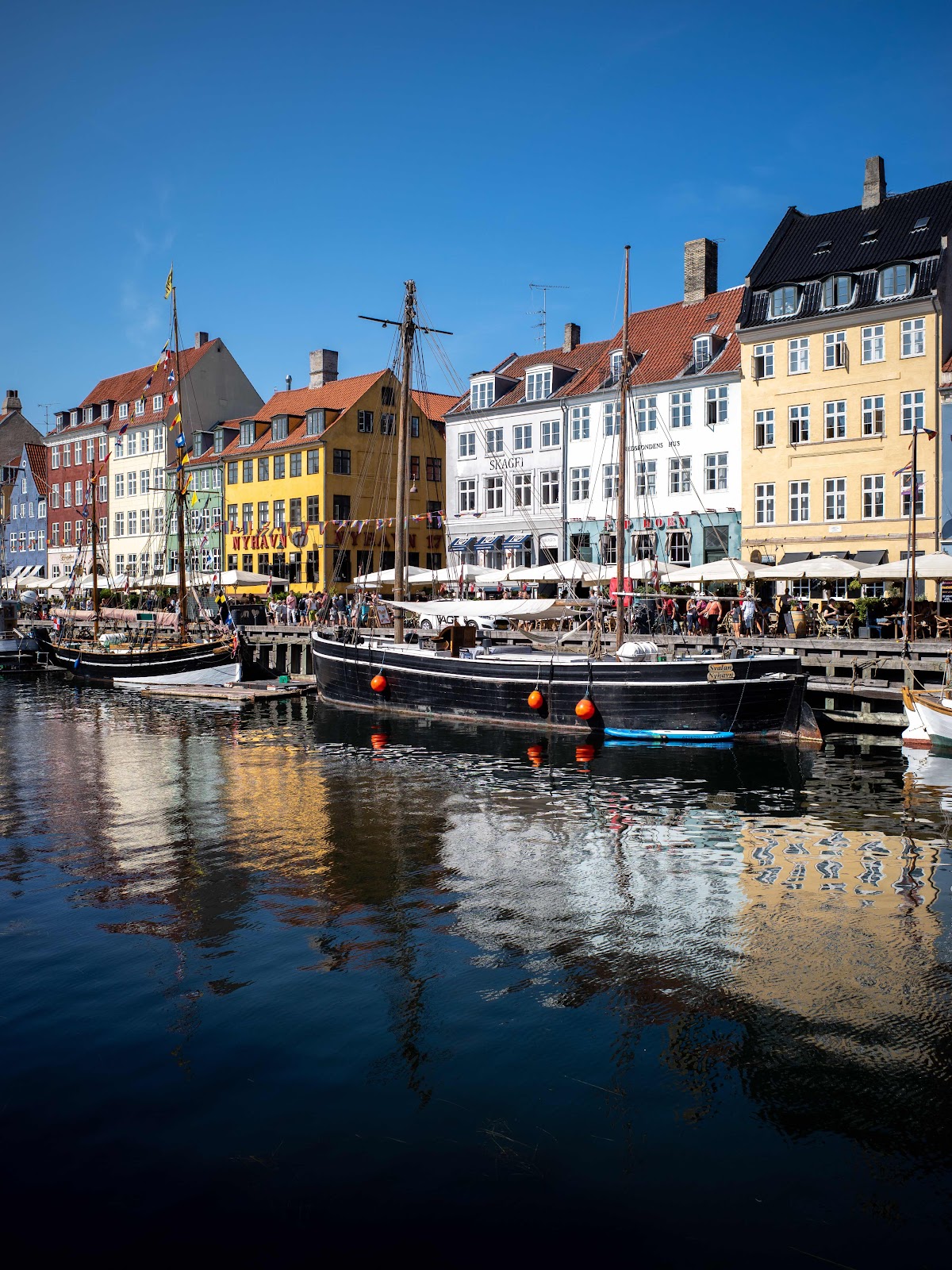
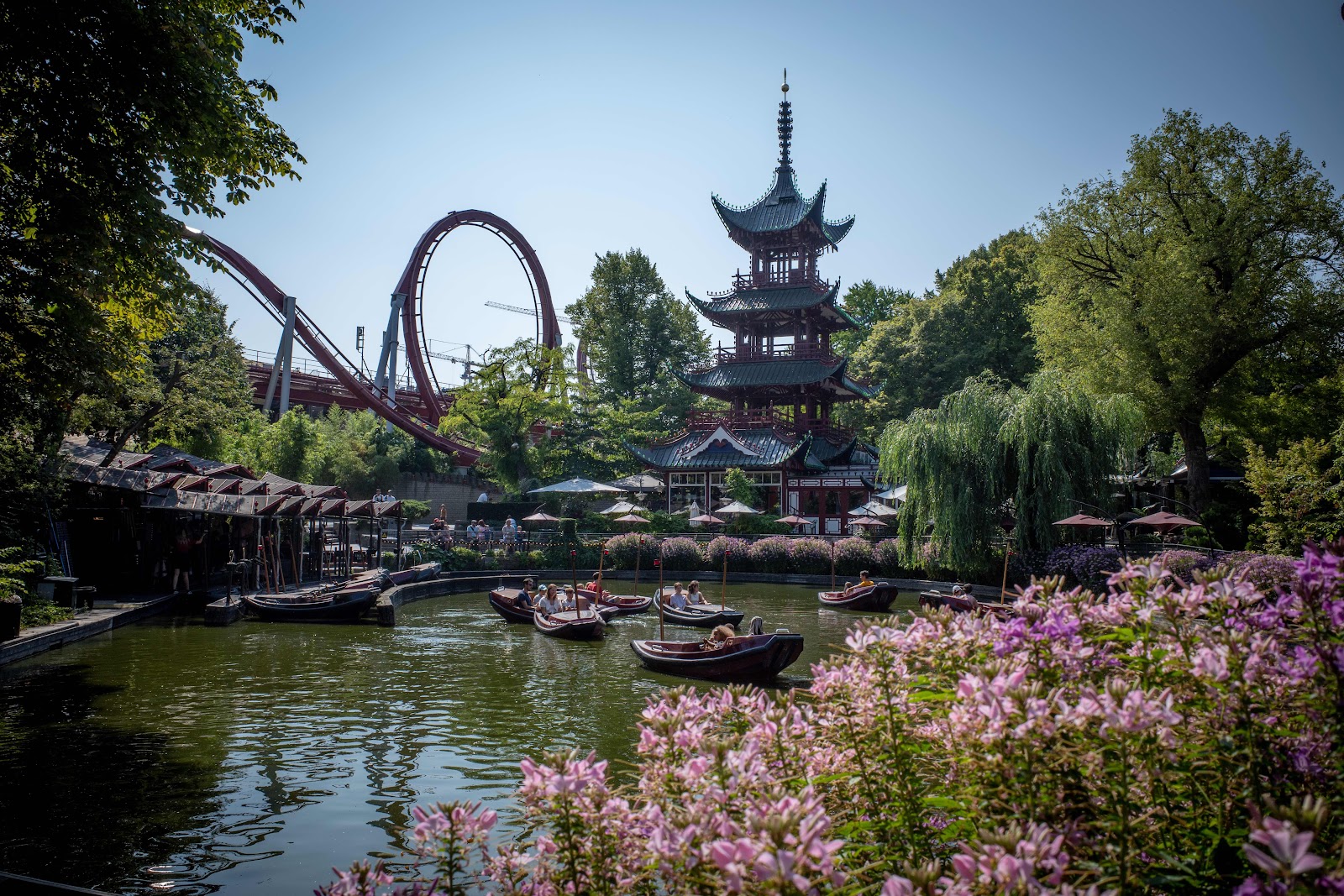
During our stay, we visited Tivoli Gardens, which is the second oldest amusement park in the world. The park has been kept close to its original look, so when grandparents visit with their grandchildren, they have shared the same experiences just decades apart. The rides were nothing to write home about, though the ambiance was quite interesting. The highlight of the Copenhagen trip for us was to meet up with two of our best friends and their families. We took advantage of our limited time, and spent as much time as we could together.
With this, our 4-month-long trip in Europe came to an end, and we flew back home with a short layover in Reykjavik, Iceland. Getting back home after such a long time was truly sweet, though I was a tad worried we might face a surprise there. Thankfully, all was well, and there were no surprises, despite leaving the house empty for four months. I guess our preparations before the trip paid off!
Per usual, here is a link to my instagram account:
https://www.instagram.com/photopensieve/
Follow me to see the latest photos of the trip. Unlike the previous posts though, there won’t be any FAQ in the end! But I will try to write a wrap-up blog post, and maybe a few more later on on how to plan such a trip with a baby and our learnings.