Split and Plitvice Lakes National Park

The second half of our trip in Croatia continued by taking a ferry to Split, where we stayed a few nights, and then renting a car to visit Plitvice Lakes National Park.
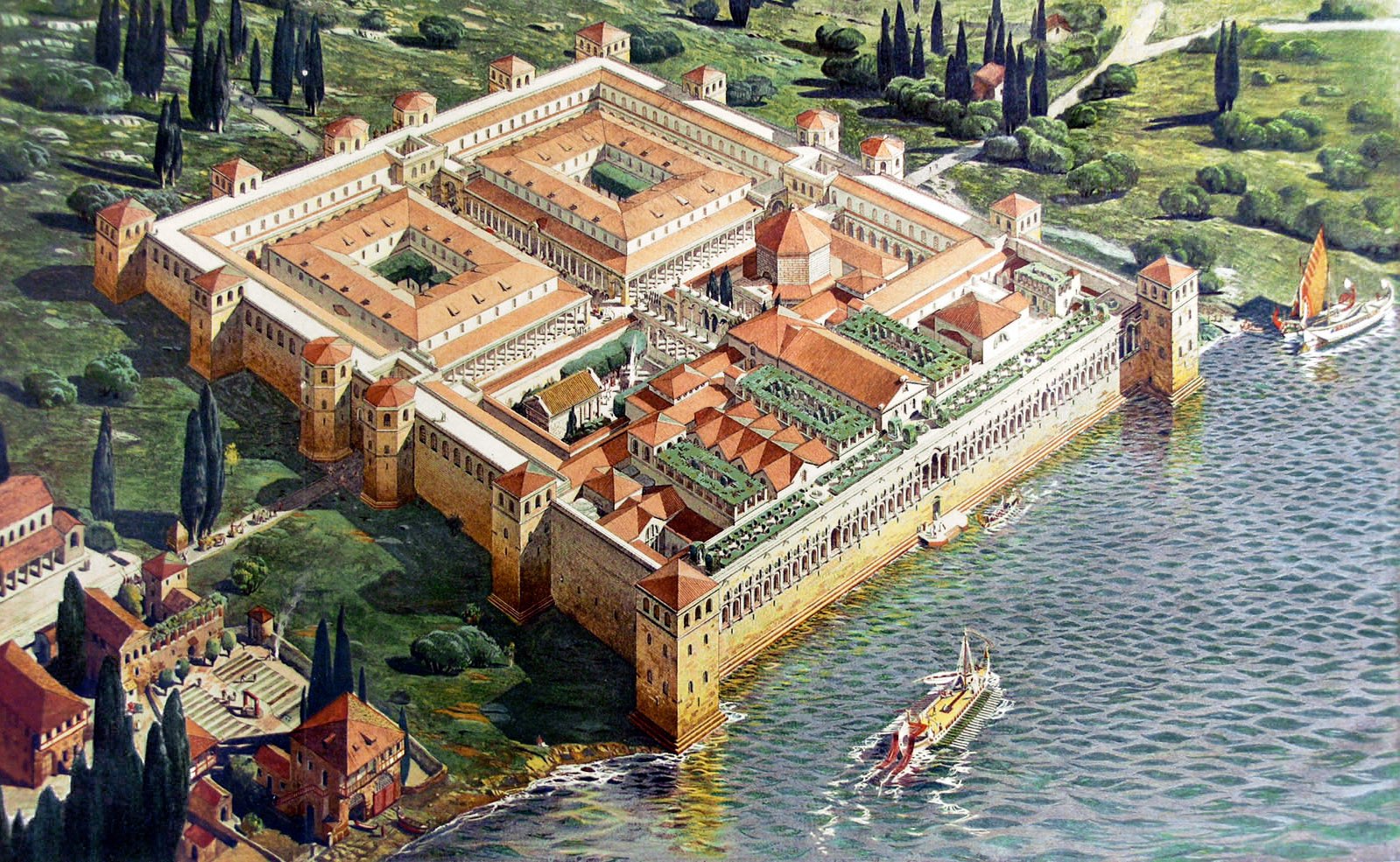

Split is another Dalmatian town with a long and interesting history. One of the most unique places to visit in Split is Diocletian Palace. But unlike other old palaces and ruins that are typically walled, separate from the surrounding neighborhoods, and you pay an entrance fee to visit, Diocletian Palace is basically the old town of Split! If you didn’t know this, you might walk around the old town, and you may never notice, though you see odd walls and columns here and there, at times incorporated into the buildings. In fact, it wasn’t until 19th century that people realized that a big part of Split’s old town used to be a palace. So long story short, Diocletian Palace used to be a palace, but over time, it became a city. I was amazed by this unique metamorphosis.
A bit of history: Diocletian was a Roman emperor at the turn of fourth century AD who was actually born into a normal plebeian family near Split in current day Croatia, joined the army when he came of age, and rose in the military ranks quickly, and became a Roman Emperor by killing the successor to the throne, claiming he had murdered the previous Emperor (cunning move). He accomplished a lot during his reign (and did some atrocities, such as persecution of Christians), but unlike other emperors who remained in power till death (which mostly happened by some sort of murder), he decided to retire, and grow cabbage in his retirement palace (somehow reminds me of Thanos!). For that reason, he built this massive palace/fortress the size of three soccer fields in less than 10 years (which is impressive), where he lived the rest of his life. What happened afterwards is that throughout the last 1600 years, the palace gradually transformed into a town, as people started moving in around 7th century and building their own houses, and later on apartments in the palace, often borrowing walls and columns, and reusing other materials. As you walk around the old town Split, you see many examples of such buildings. In some places, they only used the second floor of the palace, and used the first floor as a dump, so parts of the first floor is actually well-preserved and can be visited.
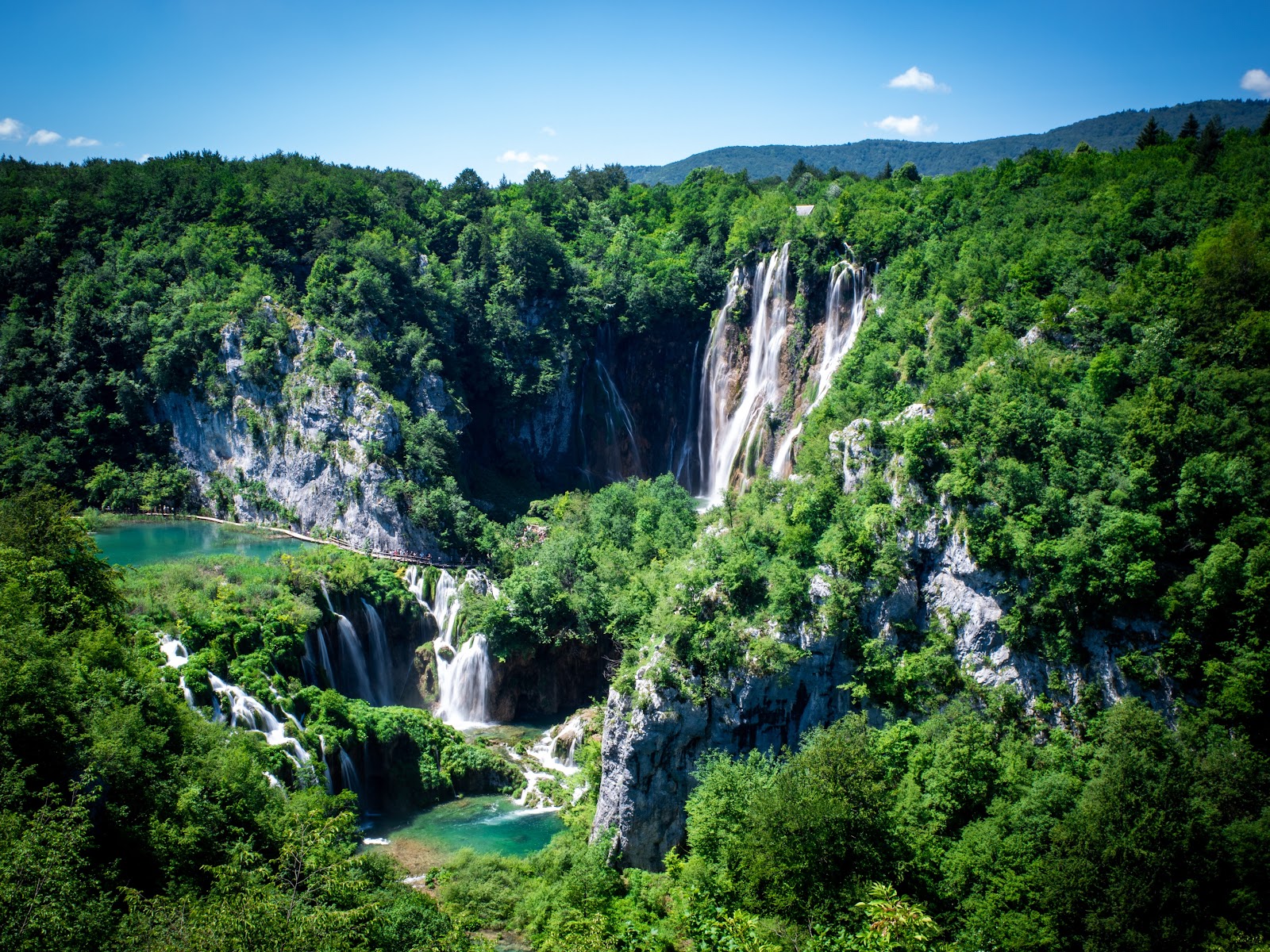
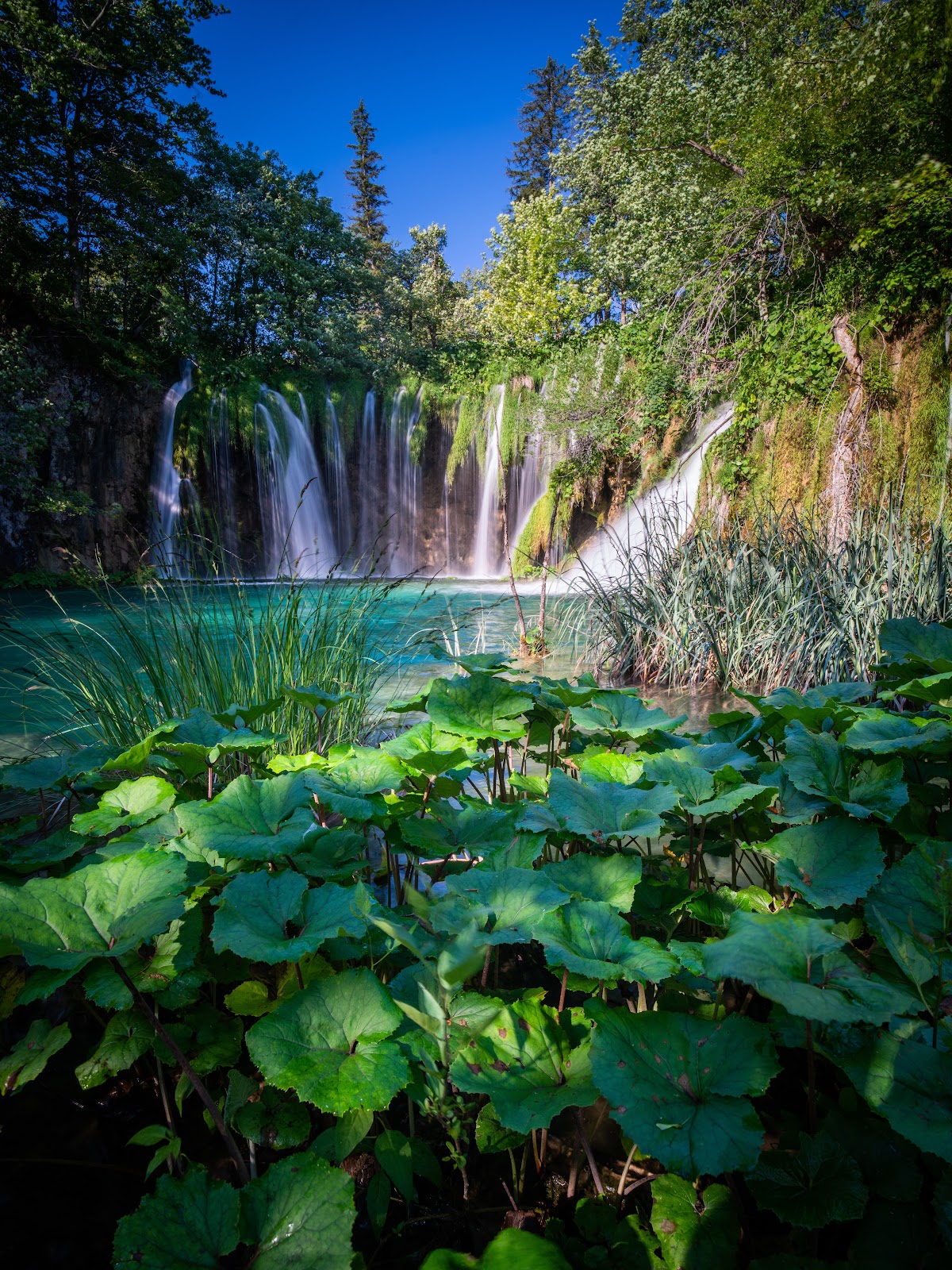
Plitvice Lakes National Park had been in my bucket list for a long time. When I started doing photography, one of my favorite subjects was waterfalls, and I would travel all over Switzerland, or even nearby French and Italian places to shoot waterfalls. Plitvice has over 90 waterfalls in a small walkable area! So needless to say, it was one of the main reasons we came to Croatia. And it did not disappoint. It’s every bit as beautiful and magical as the pictures you see. It’s like a photographer designed this place as a playground for other photographers! Anyhow, in order to make sure we have ample time, we decided to stay three nights close to the park, so we can take our time, and visit the park as much as we wanted. We rented a car from Split Airport, to get here. A quick intro about the park: There are two entrances, aptly named Entrance 1 and Entrance 2, where you can park your car. Once you get in the park, you can either walk, or take ferries and buses in certain routes. They offer some recommended itineraries (alphabetically named), clearly marked in the park. Here are my tips for visiting Plitvice Lakes National Park as a photographer - with a bay:
Do’s
-
Before the trip, make sure to do the due research on the types of photos taken there, so you know what the possibilities are. Last thing you want is end your trip, and see a photo you would have loved to capture, but didn’t know about it. Plitvice is a (too) well-photographed place, and you can be assured that if there was a possibility of a good shot, it must have been taken by others. Some photographers may cringe at the idea of taking “postcard” photos, but I always try to take those shots, and then others. The research helped me to go directly to the area I was interested in, for example, instead of wandering around looking for photos.
-
While taking photos, make sure of your own and others’ safety first, as well as your camera equipment. Plitvice sees a lot of foot traffic during the peak hour, and there are boardwalks and cliffs (though mostly protected), so it is essential to be careful while trying to capture that shot. Also don’t venture out of the guardrails looking for “the shot”. It is dangerous, as you don’t know how secure those rocks are, for example. There is a reason they’ve put a “danger sign” over there!
-
Bring a tripod, an ND filter and a circular polarizer filter. You need the tripod to achieve lower shutter speeds. ND filter will reduce the light, hence help with achieving longer exposures. Circular polarizer will cut down the light a bit, but more importantly removes the glare off the water.
-
Visit early in the morning, or later in the day, if you can. It gets crowded by 10 AM or so, so try to be there first. You will have the place to yourself (almost). This way, you avoid having people in your shots, and have them trample around on the boardwalk shaking your tripod.
-
Buy your ticket online to skip the lines. The ticket costs an arm and a leg, but you know you have to get it, so why not do it at the comfort of your own place?
-
Bring ultrawide, normal and telephoto lenses. I had 18, 35, and 75mm lenses, and they did the job. However, a zoom lens might be a better option, as you don’t have to move the filter each time.
-
Try out low shutter speed photography before visiting, so you can perfect your technique. Last thing you want are blurry photos. On that note, I highly suggest processing your photos as soon as you can during the trip, so you get to learn from your mistakes. Don’t shoot an SD card full of photos, and come back home to process it.
Don’t
-
Don’t shoot with high shutter speeds. It looks bad, and you know it. Try to get at least 1/10 to 1 second shutter speeds. You don’t need too low of shutter speed either, as it looks too silky smooth.
-
Do not bring a stroller. I’m an avid stroller fan, but it just doesn’t work here. There are too many stairs, and lots of ups and downs. Instead, bring a baby carrier. You certainly don’t want your baby to be walking on the boardwalks, as they can easily fall into the water, or someone unknowingly bumps into them.
-
Do not visit the park as part of a day tour from Zagreb/Zadar/Split. Why? Because: 1) It is too short for visiting the park AND taking photos, 2) you get there during the peak hour, which makes taking photos challenging, and 3) you lose the good light. You may also be unlucky and end up with bad weather. It’s worth staying a couple of nights here, and visit during the less crowded hours.
So how did we visit the park with a baby? One thing I managed to do (thanks to my loving wife) was visiting the park alone early mornings while our son was asleep, and be back by the time he woke up and had his morning routine. This way, I could take my Sony system with a big tripod, and freely focus on my photography. We then all went to the park, and I just brought the Ricoh GR3 (remember we had to wear the baby, plus diaper bag, lunch, water, snacks, etc), and it actually worked pretty well. The GR3 always amazes me, as it packs so many useful features. One of them is a built-in ND filter (2 stops), which came really handy when shooting the waterfalls. I managed to reduce the shutter speed to 1/8 or 1/10 in broad daylight (also thanks to the built-in image stabilization), and smooth the water motion.
We stayed one last night in Trogir near the Split airport (which has a really nice little old town, worth a visit), and then flew to Geneva for a visit to Switzerland! It’s so great to be back again in Lausanne, and meet my friends.
With this, our trip to Croatia came to an end. I have to admit that before the trip, I didn’t know much about Croatia, other than it was part of Balkan and former Yugoslavia, it has a good soccer team, and beautiful coasts. I had some “want to go” pins on my Google Maps, but now after spending two weeks in Croatia, I have even more pins on my map for future visits. This is always how it works: As you get to know a country a bit, you get to know even more interesting places there that you want to visit. There is simply not enough time to visit all, but I certainly know we will be coming back to Croatia for another visit!
Per usual, here is a link to my instagram account:
https://www.instagram.com/photopensieve/
Follow me to see the latest photos of the trip. I’ll end the post with an FAQ.
FAQ
What have you learned about Croatia’s history?
As I said, I didn’t know much about Croatia beforehand. But throughout the trip, I tried to pick up bits and pieces about the history of Croatia to help me understand the country better. In short, Croatia has a rather complicated history. There have been lots and lots of invasions, and each invader has made a mark on this country. A not so comprehensive least of invaders, settlers, and rulers in a chronological fashion is: Illyrians, Greeks, Romans, Croats, Venetians, Hungarians, Austrians, Turks, French (Napoleon to be exact), and of course they’ve had their fair share of conflicts with their Balkan neighbors over the years.
How was the food in Croatia?
We only visited the Dalmatian part of Croatia (plus Plitvice, but we didn’t eat out much over there), so I can’t really comment on Croatian food in general. The (Dalmatian) cuisine is a bit similar to Italy with similar pizza, pasta, risotto dishes. We also had some amazing grilled fish over there; cevapi which is a grilled ground meat dish; and had some delicious cheese. Great food, in general.
How was the driving with the baby this time around?
We rented a car for only 4 days, so it wasn’t as long as the one we had in Italy. But this time, we made a big change: We put the car seat in forward-facing direction, and it made a huge improvement. Now our son can easily entertain himself by watching the road. We even had a fully-awake, two hour drive, no problem! Having said that, we are fully aware that a rear-facing car seat is a safer option. Heck, if we sit in rear-facing direction, it would be safer too. But we gotta see what the law says. In the US, the recommended age for a forward-facing car seat is 2 years old or more, but in Europe, babies must be in rear-facing car seat only until 15 months old. As they say, when in Rome, do as the Romans do.
Did you bring a tripod with you during the trip?
Nope. I bought a cheap (but not too cheap) tripod and an ND filter in Split just for Plitvice. Unfortunately I had to leave the tripod in Croatia, as we are only doing carry-ons, but it was totally worth it.